New England Heritage Apple Orchards: 10 Historic Orchards Still Operating
Ten verified New England orchards that specialize in heritage apple varieties — Tower Hill, Scott Farm, Gould Hill — and what to ask for at each.
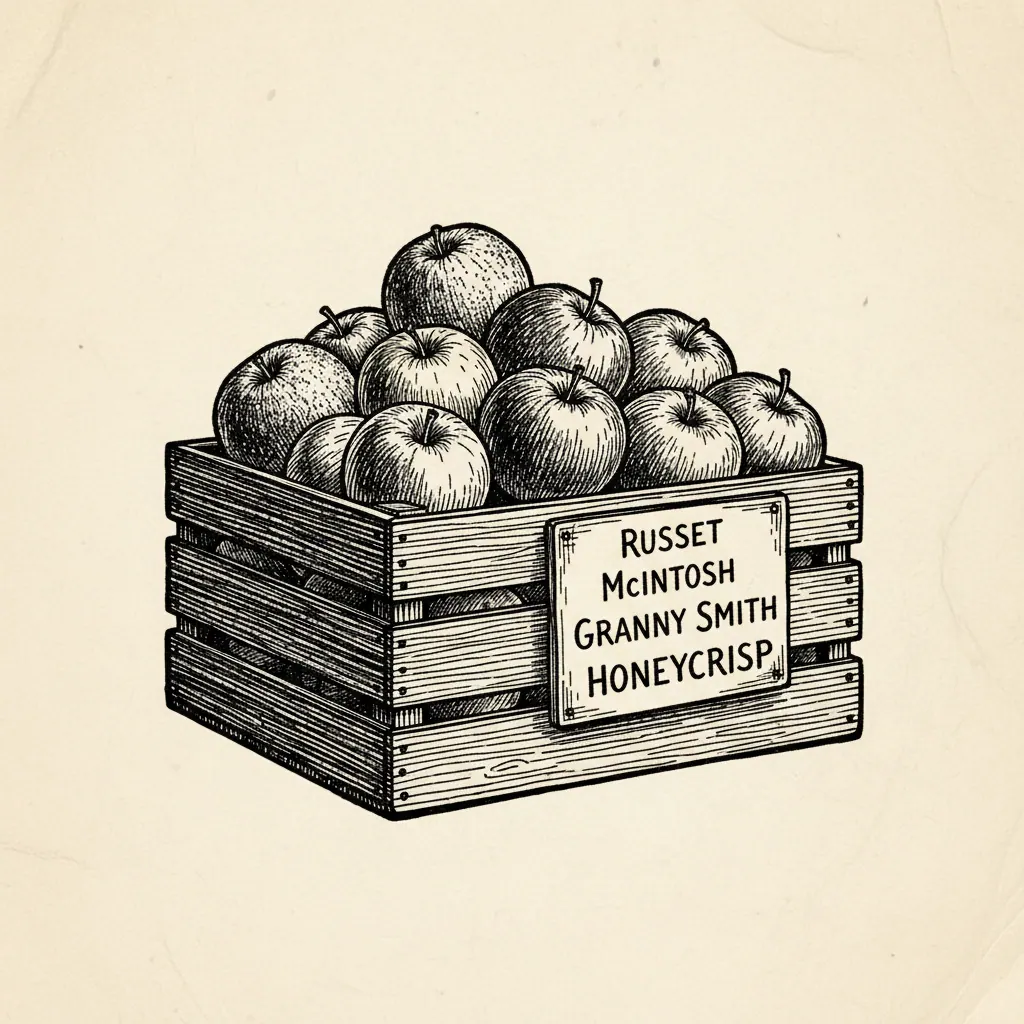
Most of the apples in a New England supermarket bin would have been unrecognizable to a Massachusetts farmer in 1880. He’d have grown Roxbury Russets and Baldwins and Hubbardstons, and pressed the ugly ones into cider that ran 8% alcohol by Thanksgiving. The Honeycrisp on display at Stop & Shop would have looked, to him, like a different fruit entirely, and in any meaningful sense, it is. The ten orchards below still grow the ones he’d have known. Some have been in the same family since before the Civil War. Some are nonprofit conservation operations grafted onto land that nearly went to housing. All of them keep at least thirty pre-1900 varieties on producing trees, and all of them sell to the public in picking season.
What Counts as a Heritage Orchard
The working definition for this directory is narrow on purpose: at least 30 pre-1900 varieties on producing trees, often grafted onto rootstock 50 or more years old, with public retail sales during the fall picking season. That’s it. It’s not a romantic standard; it’s a count. The reason for the count: there’s a meaningful difference between an orchard that keeps two or three antique trees as a curiosity (most of the picking-orchards in southern New England do) and an orchard whose business model depends on heritage stock. The first is decorative. The second is the actual conservation infrastructure for varieties that the commercial apple industry abandoned a century ago. Variety counts below are self-reported by the orchards and cross-checked, where possible, against published inventories from the North American Fruit Explorers, the New England Heirloom Apple Society, and Slow Food’s Ark of Taste apple registry. Where the orchard’s number and the published number disagree, the lower figure is used. A few of these counts will be wrong by the time you read this, since orchards lose trees, graft new ones, and rarely update their websites the same week.
Massachusetts Heritage Orchards
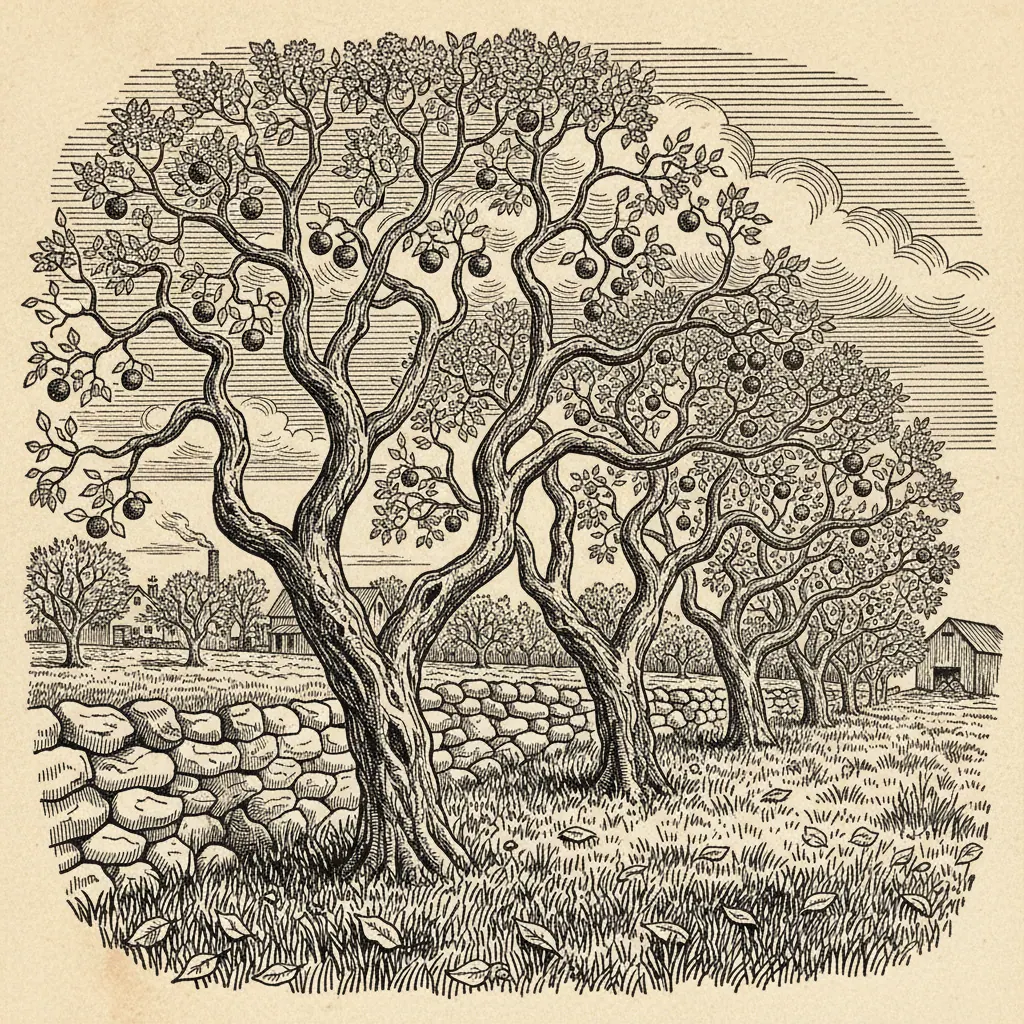
Tower Hill Botanic Garden’s Heritage Apple Orchard in Boylston is the largest documented heritage collection in the state at 119 antique varieties. It’s also unusual in that it’s a public garden, not a working farm, which means the trees are labeled and the public can walk through and read them like a museum. Tower Hill’s collection includes named varieties that no commercial orchard in New England still grows, many of them backups against the day a working farm loses its single tree. Brooksby Farm in Peabody runs 60-plus heritage varieties on the city-owned working farm, and the picking is genuinely public: no reservation, no timed entry, just show up. Russell Orchards in Ipswich keeps a heritage block alongside its working cider operation, and the cider is the reason to go: the farm has been pressing antique varieties for decades and the hard cider lineup has expanded considerably in the last five years. Carlson Orchards in Harvard documents 30 heritage varieties alongside its modern picking blocks. Carlson is also one of the larger commercial cidermakers in the state, which matters for the heritage trees’ survival; see the cider section below. Massachusetts heritage picking generally runs from late August (early varieties like Yellow Transparent) through late October (Roxbury Russet, Baldwin), with the heaviest week falling around Columbus Day weekend. Specific hours and signature varieties are in the directory table at the end.
Vermont and New Hampshire Heritage Orchards
Scott Farm Orchard in Dummerston, Vermont is the heritage orchard most worth driving to in northern New England. The count is 130 varieties, including a documented block of Esopus Spitzenburg, Thomas Jefferson’s stated favorite apple, which he grew at Monticello and which had nearly disappeared from commercial cultivation by 1950. The reason it matters is the variety count and the discipline behind it: the farm is a Landmark Trust property, which means the heritage block is protected from the development pressure that has taken out comparable orchards in the Connecticut River Valley. Champlain Orchards in Shoreham runs 65 heritage varieties on a commercial-scale working farm, with ECO certification and a serious cider program. It’s the largest heritage-stocked working orchard in Vermont. Gould Hill Orchard in Hopkinton, New Hampshire keeps 80 varieties and is the largest heritage operation in that state, with a hilltop site that’s worth the drive in mid-October independent of the apples. A scheduling note: northern New England heritage trees run roughly 7 to 10 days later than southern New England equivalents. A Roxbury Russet that’s ready in Ipswich the first week of October won’t be ready in Hopkinton until the second. Plan accordingly if you’re driving north for a specific variety.
Maine and Connecticut Heritage Orchards
Berry’s Cidermill Orchards in Andover, Maine is a small operation worth knowing about for one reason: it grows heritage cider apples specifically, bittersharps and bittersweets, the European cider varieties that aren’t worth eating but make the difference between cider that tastes like apple juice and cider that tastes like cider. The retail window is small. Call before driving. Bishop’s Orchards in Guilford, Connecticut is a seventh-generation farm (same family, same land, since 1871) with 35-plus heritage varieties alongside its larger commercial operation. The combination of long family continuity and a meaningful heritage block makes it the most useful Connecticut entry on this list. Lyman Orchards in Middlefield is the more famous Connecticut destination, and its heritage section is real but easy to miss. Ask at the farm stand specifically for the heritage block; it’s not on the standard pick-your-own map.
The Cider Story: Why Heritage Orchards Are Surviving
Heritage apples survive because of cider. That’s the whole economic story. A Roxbury Russet looks like a potato and tastes, raw, like a tannic apple-shaped sponge. A Kingston Black is bitter enough to make a child cry. A Dabinett, ripe, has the texture of damp cardboard. Nobody wants to put these in a lunchbox, and for most of the twentieth century nobody did. They got pulled out and replaced with Macintosh and then with Honeycrisp, and the heritage varieties survived in the margins. What changed is that craft cidermakers started paying real money for exactly the apples that nobody wanted to eat. Bittersharps and bittersweets command top dollar at the press because they make cider that can win awards. Roxbury Russets ferment to a dryness and complexity that no dessert apple can match. Most of the orchards on this list now run at least a small cider operation. Several of them, including Russell, Scott Farm, and Champlain, are placing at GLINTCAP (the Great Lakes International Cider and Perry Competition, the closest thing the industry has to a Michelin guide) and at other competitions. For the picking-season visitor, the practical implication is that the farm store is now usually as interesting as the orchard. Single-varietal ciders made from Roxbury Russet or Esopus Spitzenburg or Kingston Black are the kind of thing you can’t find at a liquor store, and they tell you more about the variety than eating the apple raw will.
The Directory
The table below covers all ten orchards. Variety counts and retail hours were verified against orchard websites and, where possible, by phone call. Confirm before driving more than an hour: picking dates shift by a week each year depending on bloom and weather, and farm-store hours change in mid-October when the season winds down.
| Orchard | Town | State | Heritage Varieties | Signature Variety | Picking Season | Retail Hours | Cider |
|---|---|---|---|---|---|---|---|
| Brooksby Farm | Peabody | MA | 60+ | Baldwin | late Aug–late Oct | daily, season | N |
| Carlson Orchards | Harvard | MA | 30 | Roxbury Russet | early Sep–late Oct | daily, season | Y |
| Russell Orchards | Ipswich | MA | 40+ | Cox’s Orange Pippin | early Sep–late Oct | daily, season | Y |
| Tower Hill Botanic Garden | Boylston | MA | 119 | Hubbardston Nonesuch | Sep–Oct (no pick) | garden hours | N |
| Champlain Orchards | Shoreham | VT | 65 | Calville Blanc d’Hiver | mid-Sep–late Oct | daily, season | Y |
| Scott Farm Orchard | Dummerston | VT | 130 | Esopus Spitzenburg | mid-Sep–late Oct | daily, season | Y |
| Gould Hill Orchard | Hopkinton | NH | 80 | Blue Pearmain | mid-Sep–late Oct | daily, season | Y |
| Berry’s Cidermill Orchards | Andover | ME | 35 | Kingston Black | Oct (cider apples) | limited, call | Y |
| Bishop’s Orchards | Guilford | CT | 35+ | Northern Spy | early Sep–late Oct | daily, season | Y |
| Lyman Orchards | Middlefield | CT | 30 | Rhode Island Greening | early Sep–late Oct | daily, season | Y |
| If you have an hour and one orchard to visit, the recommendation is Scott Farm in Dummerston for the variety count or Russell Orchards in Ipswich for the cider program. If you have a weekend and a car, the route worth driving is the Connecticut River Valley from Dummerston south through the Massachusetts heritage block, the same valley the original Baldwin and Roxbury Russet trees came out of, now growing many of the same varieties their great-great-grandparent trees did. | |||||||
| The next picking season starts the last week of August. |