New England Birding Hotspots by Migration Window: 20 IBAs and When to Be There
Twenty IBAs across New England with their migration windows. Mount Auburn for warblers, Wachusett for hawk watch, Plum Island for waterfowl.
New England birding isn’t a season. It’s four narrow windows, and the gap between hitting one and missing it is the gap between a twelve-species walk and a sixty-species morning. The same patch of woods that holds a Cape May Warbler, a Blackburnian, and a Bay-breasted on May 12 will hold chickadees and a single late Yellow-rumped on May 28. Two weeks. That’s the whole game. The map matters less than people think. The calendar matters more.
Why the Calendar Matters More Than the Map
A year of New England birding is structured around four windows. Spring warblers run from late April through about May 20, with the coastal peak somewhere between May 5 and May 15 depending on the year’s weather. Fall raptors run from late August through October, with broad-wings concentrated in a brutally short September window and the late-season buteos and accipiters dragging into November. Waterfowl staging overlaps the back end of hawk season and runs through November, with some species lingering on open water into December. Breeding-season specialties (the birds you’ll only get on territory) run May through July, with most singing peaking in early-to-mid June. Being at the right hotspot in the wrong week yields a quiet morning. The right week at a mediocre spot still produces birds. This is the operating principle behind every serious New England birder’s calendar. The tool that confirms a peak window is the eBird Hotspot bar chart. Pull up any hotspot on eBird, scroll to the bar-chart view, and the historical frequency of each species shows up as a colored band by week. The widest bands are the peak windows. If a species you want is showing thin gray bars in your chosen week, you’re going at the wrong time. Move the date, not the destination.
Spring Warblers: Late April to Mid-May
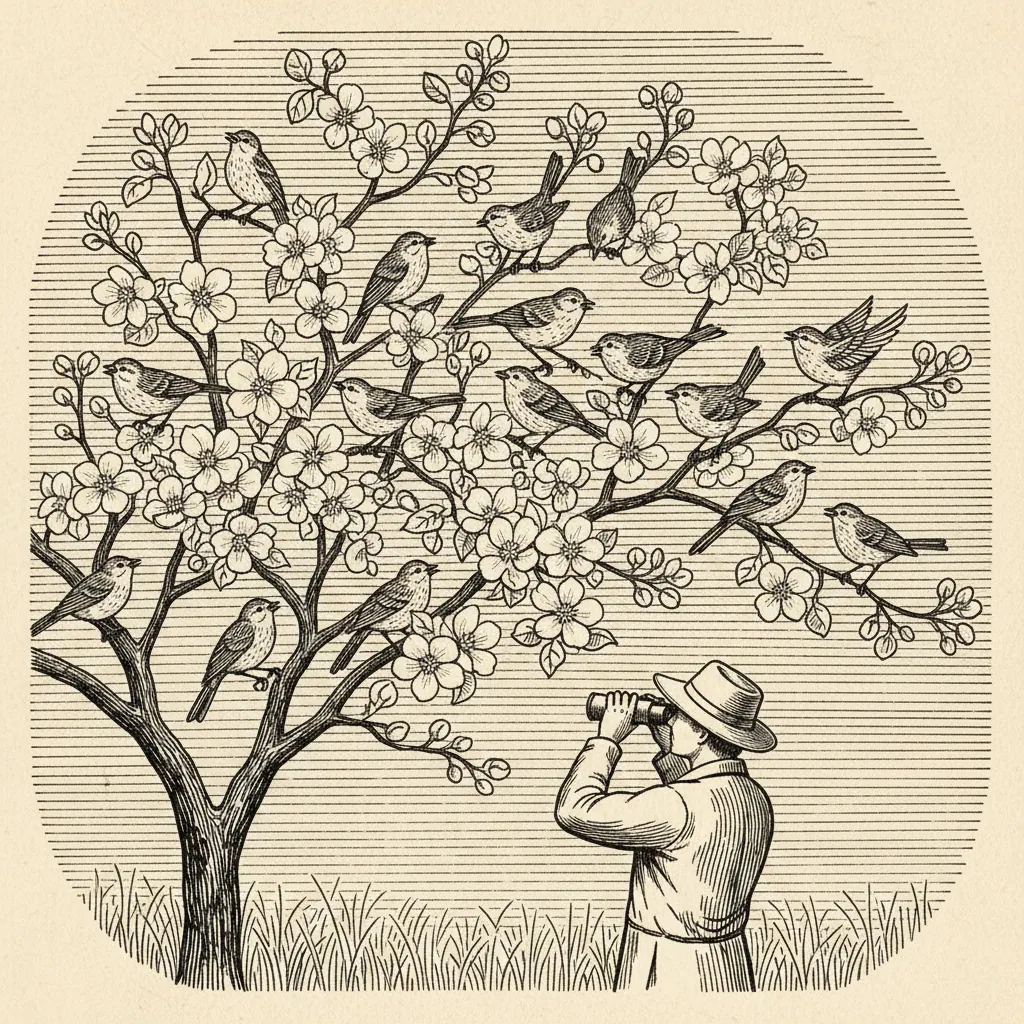
Mount Auburn Cemetery in Cambridge is the Northeast’s most celebrated migrant trap, with over 200 species recorded across its records. The peak window is roughly May 5 through May 15. Arrive at dawn. By 7:30 the dog walkers and joggers thin the warbler activity considerably, and by 9:00 the canopy birds are harder to track even with bins. Parker River National Wildlife Refuge, on Plum Island in Newburyport, runs about a week earlier on the coast and stretches longer than Mount Auburn does. The first week of May is prime, though late April pulls in early arrivals. The refuge requires a fee or a federal Duck Stamp at the gate. Bring one or the other. Interior Massachusetts and southern New Hampshire run roughly a week behind the coastal hotspots. Mount Tom in Holyoke and Manchester Cedar Swamp in New Hampshire fill the second-half-of-May slot when the coast has already quieted. The pattern is worth understanding: warblers move up the coastline first, then push inland on the next favorable wind. If you’ve missed the Mount Auburn peak, you have not missed the season. You have a window inland. The Thornton W. Burgess Society property in East Sandwich is the Cape’s funnel point in May. Cape Cod birding peaks slightly later than the Boston area because the Cape acts as a holdup for migrants working their way north, and the warblers stack there before the next jump.
Hawk Watches: Late August Through October
Mount Wachusett in Princeton is the broad-winged hawk hotspot of central Massachusetts. The peak window for broad-wings is brutally narrow: September 12 through 18, give or take a day on either end depending on the cold-front pattern. On a good thermal day the kettles can carry over 1,000 birds. On the wrong day you’ll see twelve. Pack Monadnock in Peterborough is the New Hampshire anchor and is staffed for the Hawk Migration Association of North America’s official count. Mount Watatic on the Massachusetts–New Hampshire border is the third leg of the inland triangle and offers a shorter hike than Pack with comparable bird traffic in the broad-winged window. Lighthouse Point in New Haven is the Connecticut coastal site, and it’s a different bird mix: falcons, accipiters, and shoreline raptors riding the coastline rather than the interior thermal corridors. Peregrines and Merlins show up in numbers Lighthouse Point gets that the inland sites don’t. The wind is the variable that decides the day. Northwest winds following a cold-front passage are the signal. If you’re flexible enough to drop a Saturday plan and drive to a hawk watch on the right wind, you’ll see ten times the birds of the person who scheduled it Tuesday.
Waterfowl Staging: September Through November
Parker River pulls double duty. After the warblers leave, the refuge fills with snow geese, pintails, gadwalls, green-winged teal, and the rest of the dabbling-duck roster through October. The salt pannes and the freshwater impoundments hold different mixes, so work both. Lake Champlain is Vermont’s waterfowl factory. The October-into-November window produces common loons, white-winged scoters, horned grebes, long-tailed ducks, and the full diving-duck lineup from the causeways at the lake’s south end. The wind exposure is real. Bring more layers than you think you need, especially after early November. The Salt Pond at the Cape Cod National Seashore in Eastham is the overwintering site rather than a staging site. The ducks that arrive in November stay through March. Hooded mergansers, buffleheads, and ring-necked ducks are the regulars; less common species rotate in across the season. Stratton Pond in Vermont is the interior counterpoint to the coastal sites. It receives less foot traffic, holds less variety, but produces good looks at the species it does hold. For a birder who’d rather not share a scope view with twenty other birders, the interior staging ponds are the answer.
Breeding-Season Specialties: May Through July
A handful of species in New England can only be found on territory in summer, in habitats that don’t exist anywhere else in the region. Bicknell’s Thrush nests in the alpine and subalpine spruce-fir summit zones of the highest northern peaks. Mount Mansfield in Vermont and Mount Washington in New Hampshire are the two reliable sites. June is the singing window. The species is one of the most range-restricted breeding songbirds in North America, and these summits are essentially the only places in New England it occurs. Spruce Grouse and Black-backed Woodpecker are Maine North Woods specialties, particularly in recently burned or beetle-killed spruce-fir stands where the standing dead trees provide the woodpecker’s foraging substrate. Access requires real planning. These are not roadside birds. Common Loons nest on most lakes north of Worcester County, with chicks visible riding adults’ backs by early July. The northern lakes hold higher densities, but the species has expanded its breeding range south considerably in the last two decades. Summer birding rewards a different discipline than migration birding. Territorial males sing on schedule from the same perch for weeks. If you find a Mourning Warbler on June 8, the bird will be there on June 15 and probably June 22. The patience economics flip: instead of chasing a moving wave, you stake out a known territory.
The 20-Hotspot Reference Table
A complete reference table (hotspot name, town, state, peak window, target species, parking notes, time-of-day preference, access requirements, and a first-time-versus-return-trip ranking) is the working document this guide builds toward. The data underlying the table comes from three sources: eBird Hotspot bar-chart frequencies, Mass Audubon site guides for the Massachusetts sites, and HMANA published season totals for the hawk-watch sites. Several access points need flagging up front. Parker River requires a federal Duck Stamp or refuge fee. The Cape Cod National Seashore requires a parking fee at most lots from late spring through October. Mount Mansfield’s summit access via the Toll Road has gate hours and a fee; the alternative is the longer hike from the Long Trail. Mount Washington’s Auto Road and Cog Railway have their own fee structures and operating windows. Plan the access logistics the same way you’d plan the timing. Wrong gate hours can kill a morning the same as wrong week. The table’s quick-scan ranking distinguishes the sites that produce on a single visit (Mount Auburn in early May, Wachusett on a NW-wind September day, Parker River in October) from the sites that reward repeat visits across a season to capture the full species turnover. Both categories matter. The first set is where to start. The second set is what builds a real New England year list.