The New England Maple Sugaring Calendar by Region
Six different answers to 'when is sugaring season,' depending on latitude and elevation. Open-house weekends, six sugarhouses worth driving to, and how to read the new grades.
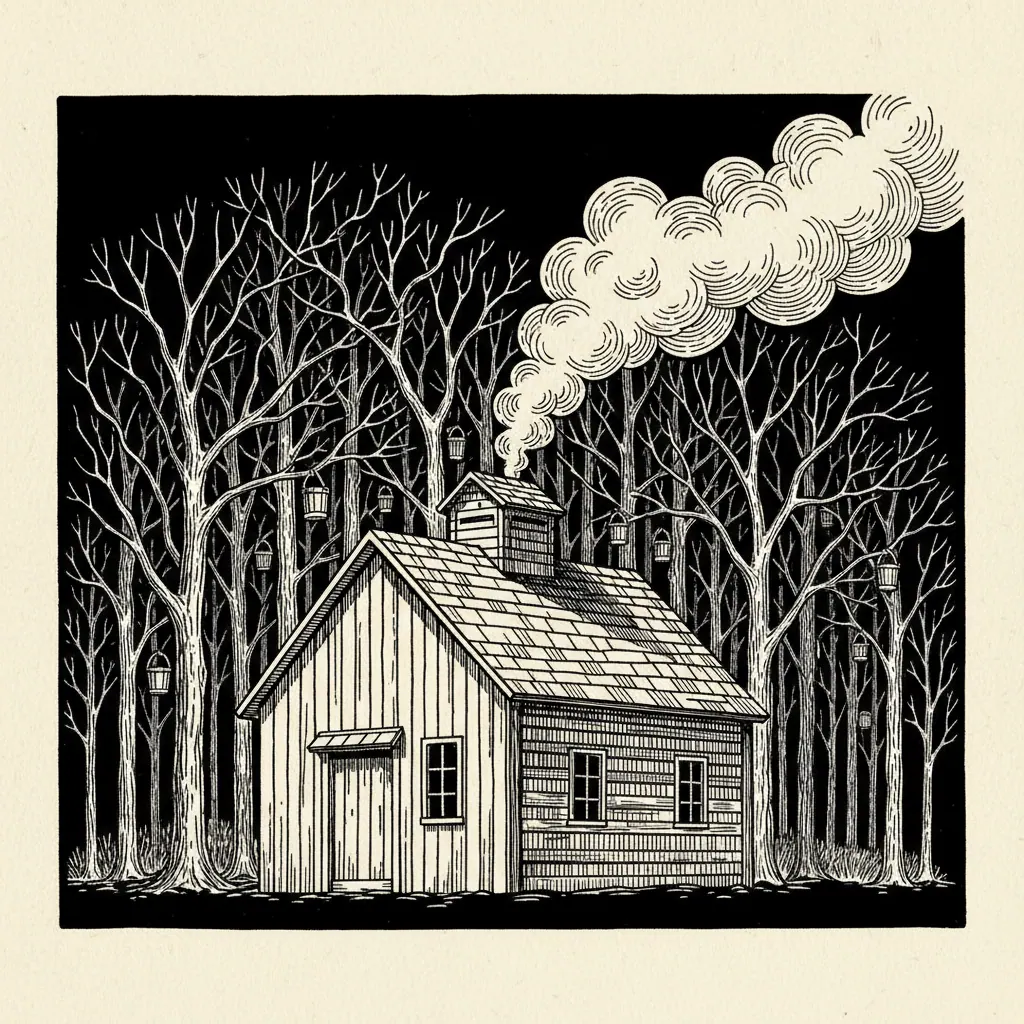
Ask when New England’s sugaring season starts and you’ll get six right answers, all of them correct, none of them transferable. The sap runs on the freeze-thaw cycle, and the freeze-thaw cycle moves north as the calendar moves forward. Any given town gets about three weeks of useful flow. The whole region, Connecticut shore to the Aroostook woods, runs about six weeks end to end. That’s the planning problem in a sentence. If you want to see an evaporator working, really working, with steam rolling off the pans and the smell of caramelizing sap thick enough to stand in, you have to chase the right latitude in the right week. A sugarhouse open on the third weekend of March in Deerfield will be done for the year by the time the trees are ticking in northern Maine.
Why the Season Has Six Answers, Not One
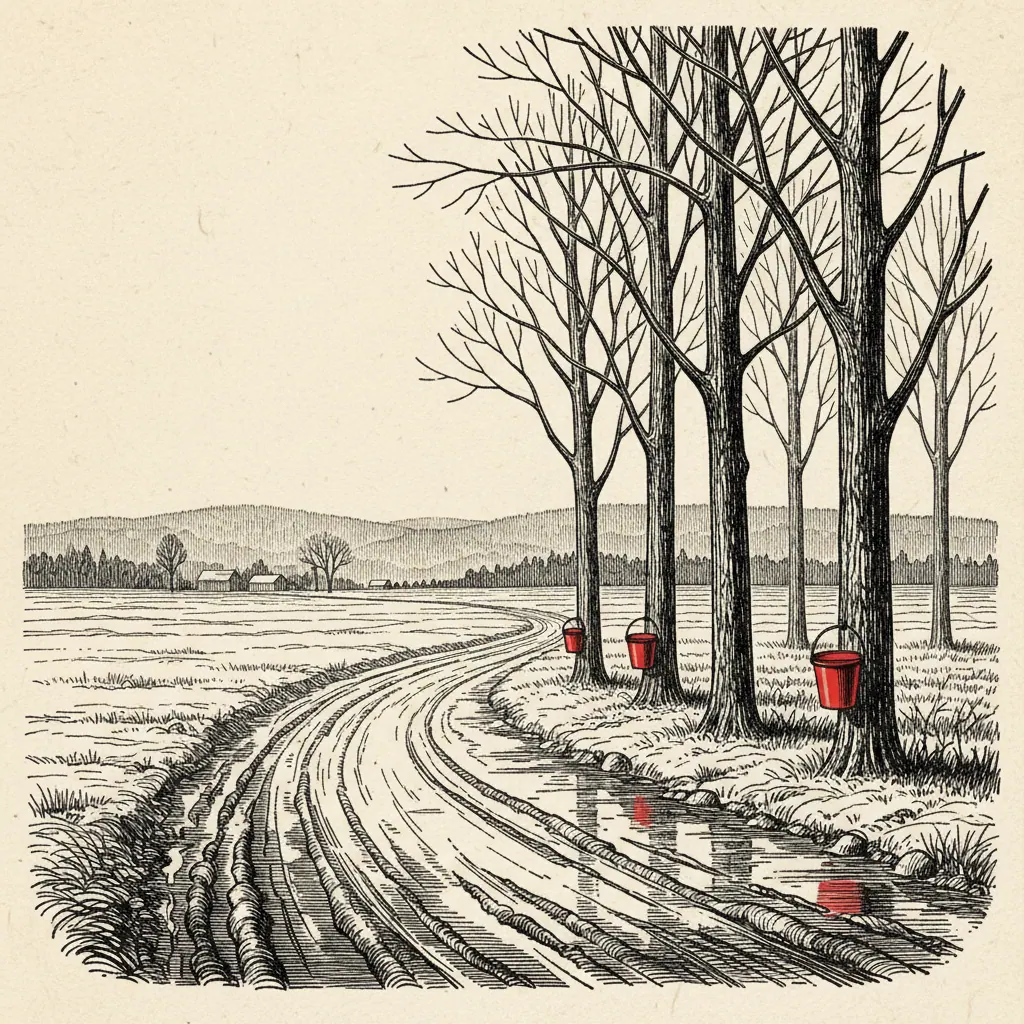
Sugar maples need a specific weather pattern to run: overnight freezes below 25°F followed by daytime thaws above 40°F. The freeze pulls sap down through the xylem, the thaw pushes it back up under pressure, and the tap catches what’s moving. No freeze-thaw, no flow. A warm February with no overnight freezes is a bad season. A March with overnight freezes that never break during the day is also a bad season. The trees need both halves of the cycle, alternating, for weeks. The chemistry is the other half of the story. Early-season sap runs around 2% sugar by weight. By the end of the season, that’s dropped to about 1%. Average it out and you get the famous boil-down ratio: roughly 40 gallons of sap to make one gallon of syrup. That’s why a sugarhouse with a small evaporator is running it twenty hours a day during peak flow, because the sap is coming in faster than it can be reduced, and once it’s in the holding tank it’s on a clock before the sugar starts to ferment. Geography sets the window. Latitude and elevation move the freeze-thaw zone north and up the mountains as spring advances. Litchfield County, Connecticut, and Aroostook County, Maine, are both producing real syrup most years, but they’re running on calendars eight weeks apart.
The Regional Calendar, South to North
Roughly, the season unfolds like this:
- Connecticut and Rhode Island: late February to mid-March. Short window, often the warmest start in the region.
- Massachusetts (Pioneer Valley and the Berkshires): early March to early April. The Berkshires run a week behind the valley floor.
- Southern Vermont and southern New Hampshire: mid-March to mid-April.
- Northern Vermont and northern New Hampshire: late March to late April. The Northeast Kingdom often peaks the first week of April.
- Western and central Maine: early to late April.
- Aroostook County: mid-April to early May. The last region in production most years; the County’s commercial operations are running while the rest of the region is already cleaning equipment. Drive times from the major hubs make some of these trips much more practical than others. Pioneer Valley is an easy 90 minutes from Boston or Hartford. Central Vermont is three hours from either. Aroostook is a destination, not a day trip: five hours from Portland, longer from Boston, and worth it only if you’re already in northern Maine for other reasons.
Maple Open House Weekend
Two weekends anchor the public side of the season. It tastes like cold water with a ghost of sweetness. Most people are surprised by how subtle it is. That’s the 2% talking. The planning advice that matters: pick one sugarhouse, not three. Open House parking lots fill by 9:30. Tour windows at adjacent producers overlap. Driving twenty minutes between stops sounds reasonable on paper and turns into an hour with the traffic the weekend creates. Pick a producer, get there early, eat the pancakes, take the tour, and let the day be that.
Six Sugarhouses Worth the Drive
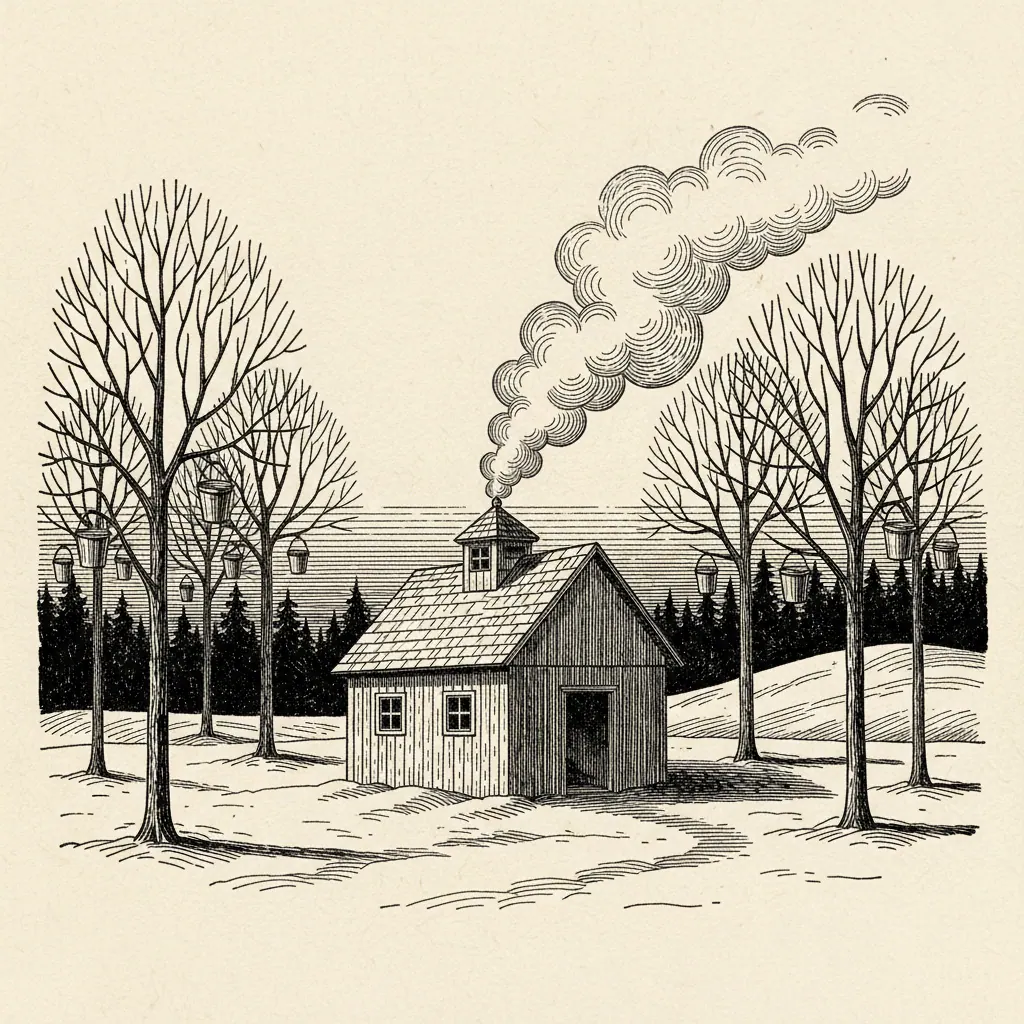
The producers below are listed because they consistently open to the public, run the evaporator visibly during the season, and sit on routes that work for travelers from the major hubs. Morse Farm Maple Sugarworks (Montpelier, VT) and Bragg Farm Sugar House (East Montpelier, VT) are the two anchor stops on the central Vermont route. They’re about ten minutes apart on Route 14, and most years the smart move is Morse Farm in the morning, Bragg in the afternoon. Sugar Hill Sampler (Sugar Hill, NH) and Norwich Farms (Norwich, VT) make a cross-river pairing for travelers working the Connecticut River valley up I-91 and I-93. The two are an hour apart on opposite sides of the river, and the drive between them on Route 10 is one of the better backroad runs in the region during sugaring season: woods on both sides, the river coming and going, taps in every roadside stand of maples. Williams Farm Sugarhouse (Deerfield, MA) is the Pioneer Valley stop. The evaporator is visible from the breakfast tables, which is the entire point. You eat your pancakes ten feet from the pan that produced the syrup on them. Gould’s Logging and Sugarhouse (Methuen, MA) is the closest sugarhouse to Boston worth the trip, about 35 minutes up I-93. It’s not the prettiest setting on the list (Methuen is Methuen), but Gould’s is a real working operation, and for a Saturday-morning Open House run from the city it solves the geometry problem better than driving to the Berkshires.
Reading the Grade on the Bottle
Vermont overhauled its grading system in 2014, replacing the old Grade A / Grade B labels with a four-tier scale: Golden, Amber, Dark, and Very Dark. The rest of New England has since adopted the same standard, which means a bottle from Maine and a bottle from Connecticut now describe themselves the same way. Flavor intensity tracks color directly. Golden is delicate, early-season syrup, made from sap with the highest sugar content and the lightest character. Amber is the middle of the season and the middle of the flavor range. Dark is later in the season, more robust, with a deeper caramel note. Very Dark is end-of-season syrup, intense enough to taste almost like molasses on the back end. For pancakes and waffles on a normal Sunday, Amber is the everyday pour, enough flavor to register, not so much it fights with the butter. For baking, for glazes on ham or carrots, for anywhere the syrup is competing with butter or bacon or roasted root vegetables, use Dark. Very Dark belongs in marinades and barbecue sauce, where its depth holds up to vinegar and heat. Golden is what you bring out for guests who think they don’t like maple syrup, because they’ve only ever had the corn-syrup-and-caramel-color stuff at the diner. One pour of Golden over good pancakes usually fixes that opinion for life. Whatever week of the season you catch, and whichever latitude you catch it at, the syrup in the bottle is the same story: a freeze, a thaw, forty gallons in, one gallon out, and a producer who stayed up most of the night to make sure the boil came off the pan at exactly the right moment. The calendar moves north. The work doesn’t change.