Pandowdy: The Forgotten New England Dessert That Beat Pie
The forgotten New England apple dessert that beat pie. A single-crust topping broken halfway through baking, soaked in molasses-and-cider syrup. Lydia Maria Child wrote it down in 1832.
Before apple pie became the American shorthand for fall baking, New England Sunday tables ended with pandowdy: a deep dish of apples and molasses under a single crust that gets broken into the syrup partway through baking. It lost the pretty contest to the lattice pie around 1920, and the country has been slightly worse off ever since. The dessert isn’t lost exactly. It survives in old cookbooks, in a few inn dining rooms on the Cape, and in the backs of cabinets where someone’s grandmother’s wooden spoon still has a dark stain along the edge. But it’s been pushed off the standard list of American fall desserts, and the standard list is poorer for it.
What Pandowdy Actually Is (and Why the Crust Gets Broken)
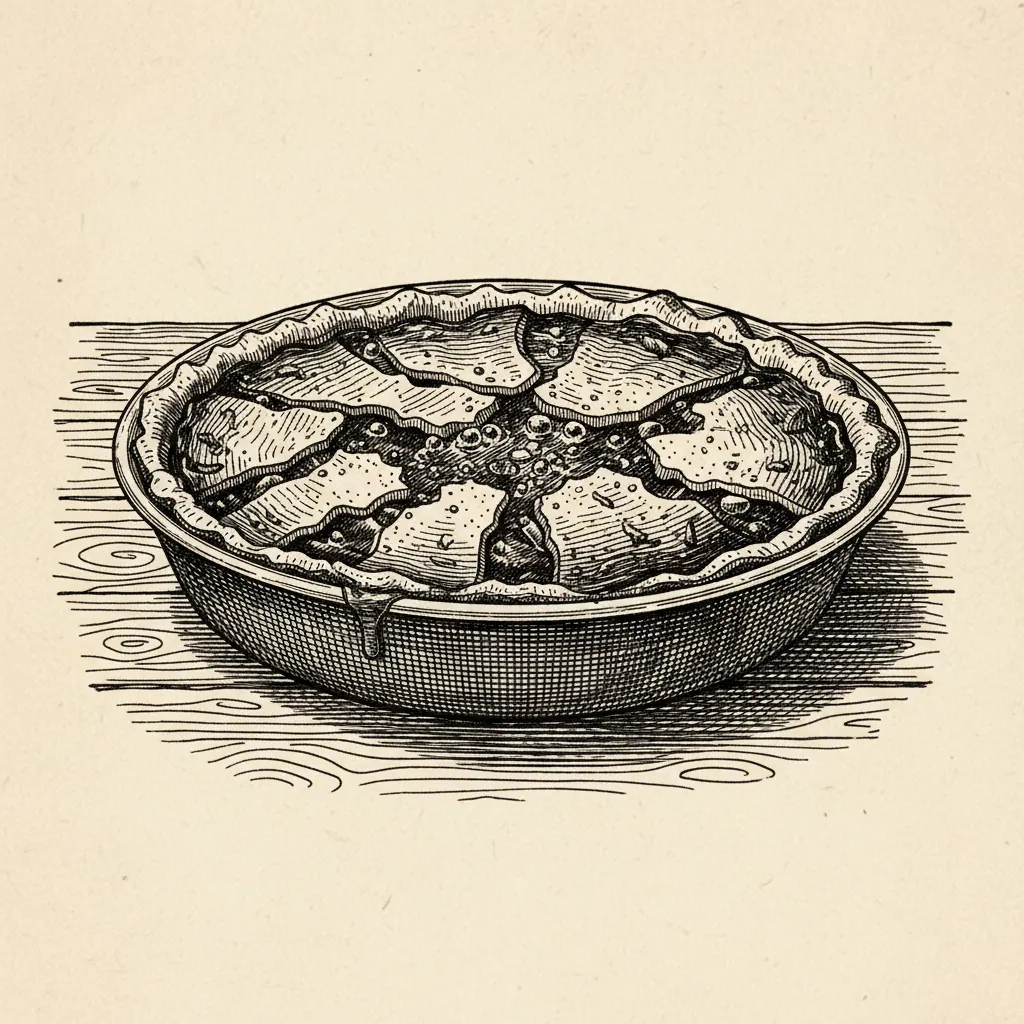
The technique is the whole story. You butter a deep dish, fill it with sliced apples bound in molasses and a little cider, lay a single round of pie pastry over the top, and bake it until the crust is set and the apples are softened underneath. Then you take it out, and with the back of a wooden spoon you break the crust down into the syrup. Press, don’t stir. The pastry should crack into rough panels and sink, not dissolve. Then it goes back into the oven for the second bake, where the broken crust soaks up the molasses syrup on the bottom and crisps again on top. That’s the dowdying. It’s the verb that gives the dessert its name, and it’s the entire point. The texture sits somewhere between pie, cobbler, and bread pudding. The top is half-crisp where it caught the heat in the second bake; underneath, the pastry is syrup-soaked and yielding, almost custardy where it meets the apples. A pie is one texture. A pandowdy is three. The molasses matters too. A pandowdy made with refined white sugar is thin and watery; the syrup never develops body, and the whole dish reads as an undercooked pie. Molasses gives the syrup the darker register that holds up to a long second bake without breaking. Maple syrup will get you part of the way there. Brown sugar will get you halfway. White sugar, no. That date is worth sitting with. It predates the American apple pie standard by decades. When Child was writing, pandowdy was the default, and pie was the variant. The reason is economic. Molasses moved through Boston by the barrel, off ships from the Caribbean trade. It was cheap and shelf-stable. Apples kept in root cellars through March, and the firm storage varieties (Russets, Northern Spy, Baldwins) held their shape under a long bake in a way that softer summer apples couldn’t. Pandowdy was a Sunday dessert because it used what was around in February, not because it was fancy. The dish stayed on the Sunday table along coastal Massachusetts and through the Connecticut River valley well into the 1880s. Yankee Magazine’s archive carried pandowdy variants into the mid-twentieth century before they faded out of the food pages, and you can still find references in the church-cookbook tradition through the 1950s. After that, the dessert mostly went underground.
How Pandowdy Lost to the Lattice Pie
A few things happened around the same time, and pandowdy lost on each of them. In 1908, the Stanley Pie Pan standardized the nine-inch round tin. Home kitchens started buying matching pans, and the dessert that fit the pan won. Pandowdy’s deep-dish format, usually closer to a casserole than a pie plate, became the odd one out in a kitchen now built around the standard round. The lattice crust came next. Popularized through women’s magazines across the 1910s, the woven top photographed beautifully and read as finished in a way a broken crust didn’t. A pandowdy out of the oven looks like something happened to it, because something did. A lattice pie looks like a postcard. In the era when food photography was first showing up in mass-circulation magazines, the postcard won. The third shift was the move from molasses to refined white sugar in home baking. By 1920, sugar was cheap, white, and modern. Molasses read as rustic in the bad sense: old-fashioned, dark, your-grandmother’s-pantry. The desserts that depended on molasses for their structure, pandowdy chief among them, started reading as backward. They didn’t disappear. They just stopped getting passed forward.
The Recipe (Classic Molasses Pandowdy)
This hews close to the Child template, with one concession: a little maple syrup in with the molasses. Pure molasses can run bitter on the second bake; the maple smooths it. For the filling:
- 6 cups peeled and sliced firm apples (Northern Spy or Cortland)
- 1/2 cup molasses (not blackstrap)
- 1/4 cup maple syrup
- 1 tsp cinnamon
- Pinch of nutmeg
- 1 tbsp lemon juice
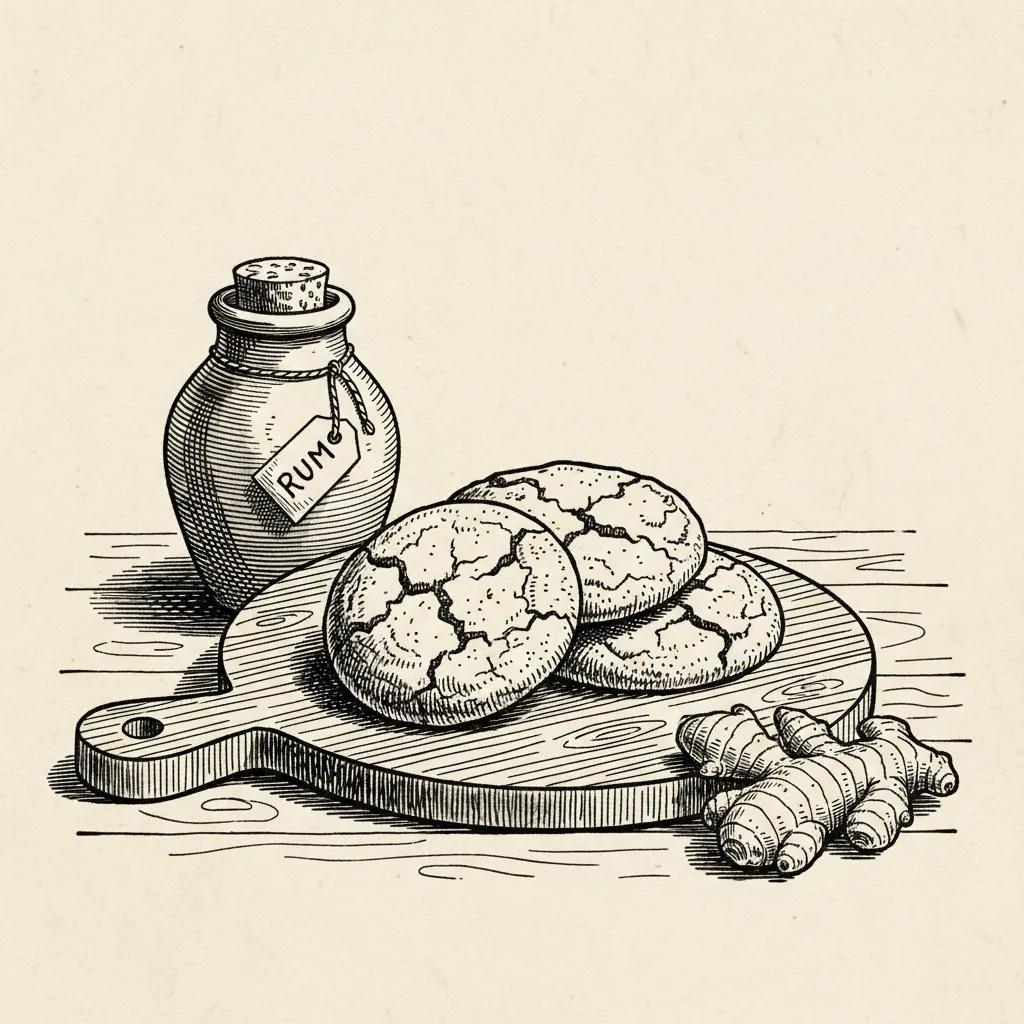
- Butter for the dish For the top: one round of pie pastry, rolled to fit a 9-inch deep dish. Butter the dish. Toss the apples with the molasses, maple, spices, and lemon juice, and turn them into the dish. Roll the pastry to a round just larger than the dish, lay it over the apples, and tuck the edges down inside the rim. Don’t crimp, just tuck. Bake at 375°F for 30 minutes, until the crust is set and pale gold. Pull it out. With the back of a wooden spoon, break the crust down into the apples; press straight down, working in panels, until the pastry has cracked and sunk into the syrup. Don’t try to stir it. Return to the oven for 20 minutes more, until the broken crust on top is dark gold and the syrup is bubbling at the edges. Serve warm with heavy cream poured over. Not ice cream; the cold flattens the molasses, and the syrup needs to read warm. A jug of unwhipped heavy cream at the table is the right move. Three regional variations worth knowing: A pear pandowdy with Bosc and a little less molasses; pears bring more moisture, so cut the cider entirely if you’re using them. The all-maple New Hampshire version swaps the molasses out for maple syrup straight, finished with a spoonful of maple sugar on the crust before the first bake; the result is paler and sweeter, less of the dark register but lovely in October. And the Marblehead rum pandowdy, which stirs 2 tbsp of dark rum into the syrup before the apples go in. The rum cooks off most of the alcohol but leaves a back-of-the-tongue warmth that pairs well with sharp apples.
Where to Order Pandowdy in 2026
Restaurant menus dropped pandowdy a century ago and haven’t really come back. There are two exceptions worth knowing about on Cape Cod and in central Massachusetts. The version in their cookbook follows the Child template closely (molasses-forward, single crust, properly dowdied) and is the closest thing to a benchmark you’ll find in a restaurant dining room. The Old Mill at Westminster runs a maple pandowdy in October, closer to the New Hampshire all-maple variant than to the coastal molasses version, and lighter for it. Worth driving for if you’re already heading out toward the Wachusett area for leaf season. Beyond those two, it’s a make-it-at-home dessert. Which is probably the right place for it. Pandowdy was a Sunday-table dish before it was a restaurant dish, and a Sunday-table dish is what it should go back to being: broken crust, heavy cream, a deep dish in the middle of the table, and a reason to wait for the apples to come in.