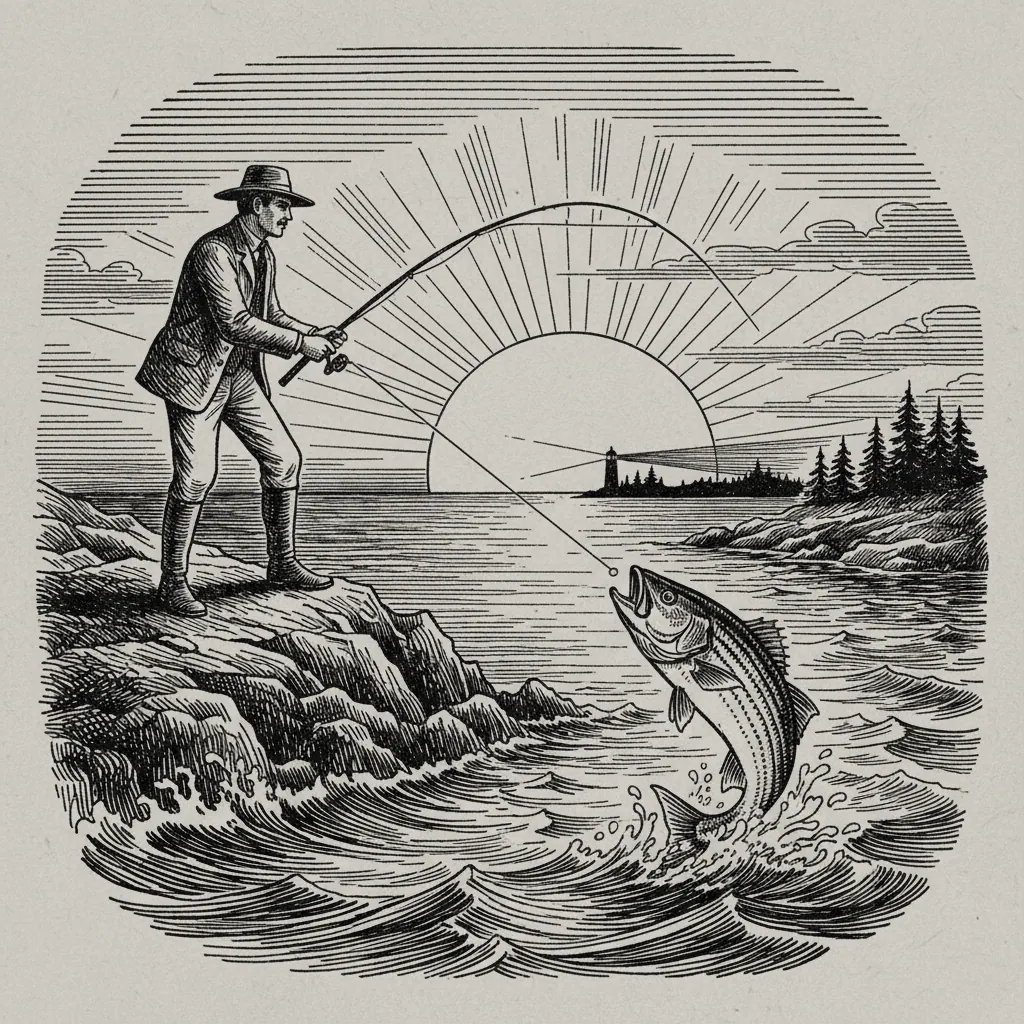
Striper Fishing in New England: A Field Guide
Striped bass run the New England coast from May through October. Where to find them, what they eat, and how to rig for them — from the surf and from a boat.
The striped bass — “stripers” to anyone who fishes for them around here — is the prize fish of the New England coast, and has been since colonial times. They’re native to most of the East Coast, but the population we fish for migrates between the Chesapeake Bay and the Hudson River, with the bigger fish pushing well past that on either end.
Where They Live
Stripers are a coastal fish. You almost never find them offshore. Look instead in river mouths, shallow bays, along rocky shorelines, and parallel to sandy beaches where the surf is working.
Schoolies — fish under three years old — will run upstream into the Hudson, Connecticut, and Merrimack rivers. Adults do this less often, but they do it when the bait is worth the trip.
Stripers originating in the Chesapeake Bay migrate north each spring along the coast between the Hudson River and, in some years, the Bay of Fundy. The schoolies push into the Hudson, Connecticut, and Merrimack rivers; the adults follow the bait. They turn around and head south once the fall run starts.
They aren’t picky eaters. The list of what they’ll hit reads like a coastal census: alewives, flounder, smelt, silversides, eels, sea worms, squid, and the occasional crab or mollusk. They feed hardest from dusk to dawn. In high summer, they go almost fully nocturnal.
When to Fish
Dawn and dusk are the best windows most of the season. From late June through August, switch to nights. Stripers key on moving water — strong tidal current, the wash of breaking waves, the seam where a current line meets slack water. Shore anglers do best fishing what’s called “live” water: places where tide and surf are doing the work for you.
Tackle
A few configurations cover most situations.
- Surf rod, conventional reel. A 10- to 12-foot surf rod with a conventional reel spooled with 30- to 40-pound test handles swimming plugs and live eels from the beach.
- Medium-to-heavy spinning rod. For plugging, jigging, or bottom-fishing bait, a spinning setup with 12- to 20-pound test is the workhorse.
- Terminal tackle. Tie lures to the line with a snap swivel. For bait, use a pyramid sinker and a long leader with a brightly colored float — that keeps the bait up off the bottom and out of reach of the crabs and skates that will otherwise strip you clean.
Live Bait
Live-lining is how you get the biggest fish. Herring, mackerel, and pogies are the standards. Hook the baitfish through the back or the snout, single or treble, so it stays put when a striper inhales it.
A Resource Worth Bookmarking
On The Water Magazine is the go-to for current striper news in the Northeast. Their Stripers and Blues section runs regular reports through the season, and they publish the year’s striped bass regulations by state every spring. Check those before you keep a fish — the rules change.
Eating What You Keep
A striper takes well to almost any preparation: steaked, baked, broiled, grilled. Thick steaks are excellent stuffed with bacon, onion, tomato, green pepper, and parsley and finished on the grill. For a more traditional treatment, the New England striper roll is hard to beat — a flaky white-fleshed answer to the lobster roll, eaten the same way: warm, on a buttered split-top bun.
The spring run is closer than it feels. Get the rod out of the basement.
Frequently Asked Questions
When do stripers arrive in New England waters? The spring run typically reaches southern New England by late April or early May, with fish pushing into Massachusetts and Maine waters through June. The fall run reverses course starting in September and can hold strong through October depending on water temperature and bait.
What is the best bait for striped bass from shore? Live eels are hard to beat after dark. During the day, swimming plugs, bucktail jigs, and chunk bait — bunker, mackerel, or herring — all produce. Match what’s in the water if you can figure out what the fish are keyed on.
Do I need a saltwater fishing license to fish for stripers in New England? Yes, in most states. Requirements and size limits vary by state and change year to year — Massachusetts, Rhode Island, Connecticut, New Hampshire, and Maine each set their own rules within federal guidelines. Check On The Water’s annual regulations roundup or your state’s marine fisheries agency before you go.