The New England Farmer's Market Calendar: 80 Markets and Their Opening Dates
Eighty New England farmers' markets and their opening dates. Year-round options, seasonal markets, and which days each operates.
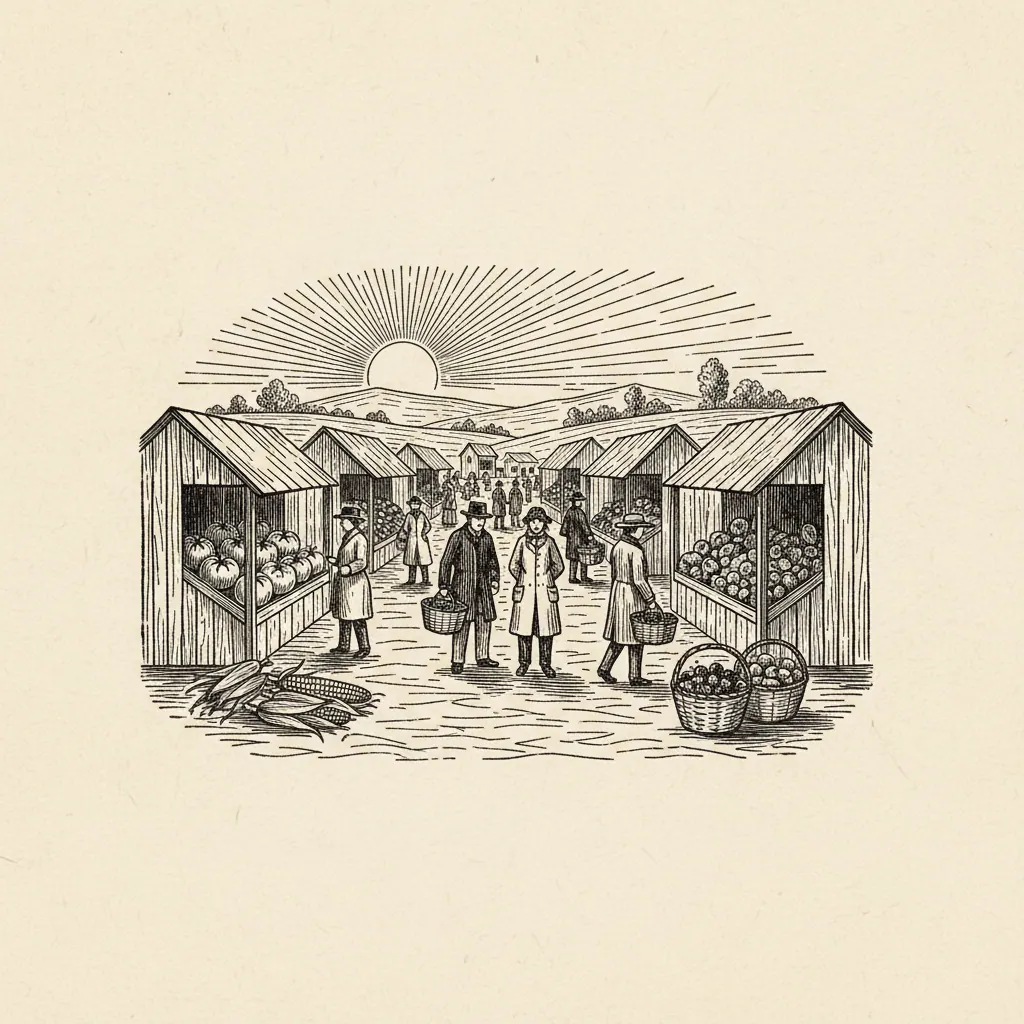
Every March, the same question runs through every New England kitchen: when does my market open this year, and which one’s worth the drive? The market managers know the answer by mid-February. The rest of us find out in pieces: a Facebook post here, a chalkboard sign there, a flyer at the co-op. This is the consolidated answer, pulled from the six state federations that track these markets and publish their calendars each spring. Eighty markets, six states, opening dates and days and seasons. Use it as a planning tool: the year-round markets in March, the May openings as the asparagus comes in, the full schedule by the third week of June.
How to Read the Calendar
Markets here are grouped by opening month, with year-round first, then April, May, and June, and within each group sortable by state, town, and day of week. Vendor counts and season ranges come from each state’s farmers market association: the Federation of Massachusetts Farmers Markets, NOFA-VT, the Maine Federation of Farmers Markets, NH Made’s directory, the Connecticut Department of Agriculture, and Farm Fresh Rhode Island. Year-round markets across the region almost always shift indoors from November through April. The summer site is usually a town green, a square, or a parking lot; the winter site is a community center, an armory, a school gym, or a converted mill. Where the two venues differ, the table notes both. One practical thing the calendars don’t tell you: vendor selection thins fastest in the first ninety minutes. If you want bread, get there early. If you only want roots and storage crops, the last hour is fine and often discounted.
Boston-Area Year-Round and Early-Opening Markets
The Boston Public Market at Haymarket is the only fully indoor, fully year-round market in the region, open seven days a week, with about three dozen New England producers under one roof. It runs differently from a seasonal market: less event, more grocery. The vendors are there every day. The pace is even. Around the city, the Saturday year-round circuit is covered by three indoor markets that pick up where the outdoor season ends. The Cambridge Winter Market runs at the Cambridge Community Center. Brookline’s winter market sits at Coolidge Corner. Somerville’s Winter Market runs at the Center for Arts at the Armory on Highland Avenue, which is worth visiting for the building alone. The SOWA Open Market opens in mid-April and runs Sundays through October at the SoWa Power Station lot in the South End. It’s the closest thing Boston has to a real Sunday market, and the prepared-food side has grown over the last decade to roughly equal the produce side. If you arrive at any of these markets after about 10:30, expect the bread tables to be picked over and the most photogenic produce gone. The flowers go fast too. Roots, eggs, cheese, and meat hold up.
Massachusetts Main Season (Mid-May through October)
The Boston city markets cover most days of the week between them. Copley Square runs Tuesdays and Fridays in the plaza beside Trinity Church, mid-May through late November. Charlestown’s market runs Tuesdays at City Square. Roslindale Square’s market, the one that essentially launched the modern Boston farmers’ market revival in the 1980s, runs Saturdays, June through November. Davis Square in Somerville runs Wednesday afternoons and Saturday mornings. MetroWest fills in around the Pike. Lexington runs Tuesday afternoons and a separate Saturday market through the season. Concord’s Thursday market on Walden Street is one of the older ones in the state; Concord adds a Saturday market in summer. Newton, Wayland, and Belmont round out the inner-suburb circuit, all on Saturday or Sunday mornings. New Bedford, Plymouth, Sandwich, Orleans, Wellfleet, and Provincetown all open between late May and late June. The Cape markets stay light on produce and heavier on prepared food and shellfish than the inland markets, a function of geography more than preference. Western Massachusetts is the strongest belt in the state. Northampton’s Tuesday Market on Gothic Street, the Amherst Saturday Market on the Common, and the Great Barrington Farmers’ Market at the Berkshire Co-op lot anchor the Pioneer Valley and the Berkshires. Vendor counts at all three regularly run above forty in peak season.
Vermont’s Market Belt
Vermont punches above its population. NOFA-VT’s directory tracks roughly seventy markets statewide; the eighteen with the deepest vendor rosters are the ones worth structuring a weekend around. The Burlington Farmers’ Market is the flagship: Saturdays year-round, City Hall Park in summer, and shifting to indoor venues November through April per NOFA-VT’s published calendar. Vendor counts climb past ninety in July. Stowe runs Sundays, May through October, on the Mountain Road. Brattleboro’s Saturday market on Western Avenue runs May through October and is the strongest market in the southeastern corner of the state. Montpelier’s Capital City Market runs Saturdays beside the State House. Middlebury’s Saturday market sits in Marbleworks beside Otter Creek. The Champlain Valley adds Shelburne, Richmond, Waitsfield, and Norwich: small markets by Burlington’s standard but with tight, repeat-vendor rosters and the kind of weekly-rhythm community that Vermont does better than anywhere else in the region.
Maine, New Hampshire, Connecticut, Rhode Island
The Maine coast holds together as a single market itinerary if you want to drive it. The Portland Farmers’ Market runs Saturdays year-round, at Deering Oaks Park in summer and at the former Maine Girls Academy in Portland in winter, a venue change that the Maine Federation of Farmers Markets and the Portland Press Herald have both covered in recent seasons. New Hampshire’s strongest market is Portsmouth: Saturdays in summer at the Strawbery Banke parking lot, plus a Wednesday market downtown, and an indoor winter market that runs through March. Concord’s market runs Saturdays on Capitol Street. Salem, Dover, and Wolfeboro round out the southern New Hampshire circuit. Connecticut’s markets cluster around CitySeed in New Haven, which runs both Saturday and Sunday markets across multiple neighborhoods through the season. The Hartford Regional Market is the wholesale-and-retail hybrid the state’s restaurants use; Coventry runs a strong Sunday market at the Nathan Hale Homestead, and Westport’s market at Imperial Avenue is the Fairfield County standard. Rhode Island is small and dense. The Aquidneck Growers Market in Newport runs Saturdays year-round, indoors at the Newport Vineyards in winter. Providence has the Hope Street Market on Saturdays and the Armory Park market on Thursdays. The Pawtucket Wintertime Farmers Market at the Hope Artiste Village fills the off-season, November through May, Saturday mornings, and is one of the strongest indoor markets in southern New England. The full table sits below this post. Print it, fold it, put it in the glove box. By the second week of June, every market on the list is open, and the question shifts from when to which one this Saturday.