The New England Drive-In Theater Survivors Map: 12 Still Lit, Where to Sit, What to Watch
Twelve drive-in theaters still operating in New England, all family-owned, mostly converted to digital projection. Where to sit and what's playing.
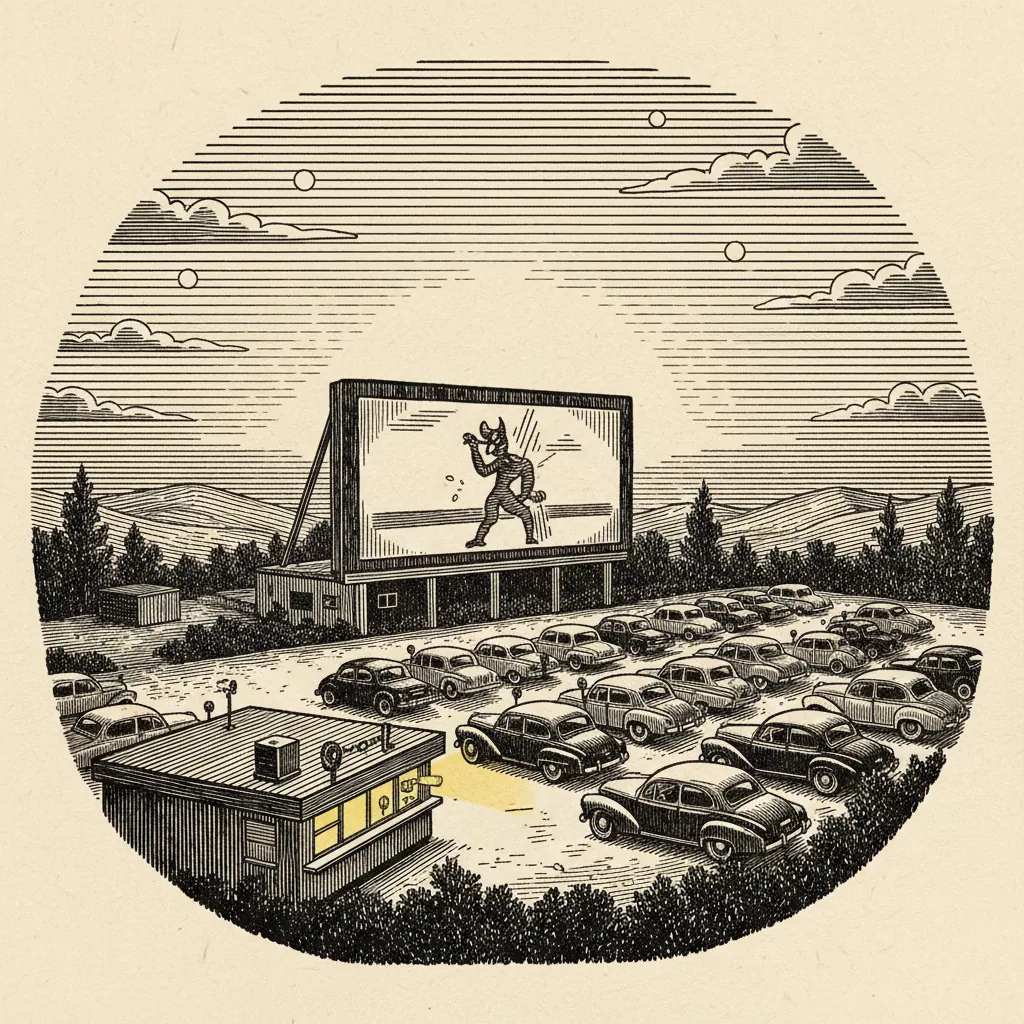
At the 1958 peak, New England had roughly 100 drive-in theaters scattered across cow pastures, highway shoulders, and the edges of mill towns. Twelve are still lit. Most are family-owned, most converted from 35mm to digital projection in the squeeze between 2012 and 2014 when the studios stopped shipping film prints, and all of them are running a business model that depends on the popcorn counter more than the ticket booth. The math is unsentimental. A drive-in survives because a family of five pays one car-load price at the gate and then spends thirty dollars at the snack bar. The screen is the lure. The fryer is the business.
The 12 Survivors, by State
The current count, working north and west from Cape Cod: Massachusetts (2). The Mendon Twin in Mendon and the Wellfleet Drive-In on Cape Cod. Both are two-screen operations, both run a May-through-October calendar, and both anchor their towns on summer Friday nights in a way that has no obvious modern equivalent. Wellfleet is the only drive-in left on the Cape; the lot also hosts a flea market on weekend mornings, which is a tell about how concession-and-ancillary the economics really are. New Hampshire (3). The Northfield Drive-In in Hinsdale, just over the Massachusetts border and pulling cars from both states; the Milford Drive-In; and the Weirs Drive-In in Laconia, which sits on the Lakes Region tourist circuit and benefits from the seasonal population swell. Maine (4). Bethel, Bridgton Twin, Saco, and Skowhegan. Skowhegan opened in 1954 and is one of the oldest still operating in New England, old enough that the original speaker poles are still standing in places, even though the audio has run through car FM radios for a generation. Vermont (2) and Connecticut (1). The Fairlee Drive-In and the Sunset Drive-In in Colchester carry Vermont. The Mansfield Drive-In in Mansfield is the lone surviving Connecticut drive-in, one screen against a state that once had dozens. Weeknight shows get added in July and August at most lots, when the summer school calendar gives owners a deeper audience pool. The first feature of the night is the family pick, usually whatever PG or PG-13 release is in wide circulation. Gates open around dusk, which in New England means anywhere from 7:45 in early May to 8:30 in late June, then walking back toward 7:00 by mid-September. The second feature starts after the first ends, typically pushing past 11:00, and the programming skews R-rated past midnight on the assumption that the kids in the back of the wagon are asleep by then. Off-season is hopeful rather than reliable. A few owners run a Halloween weekend or a holiday-themed night, but the business is built around the summer school calendar, and you should not assume any New England drive-in is operating between November and April without checking. Ticket prices run $10–15 per car at most lots, not per person. That pricing is the entire reason a family of five is the target customer. A couple paying $12 for a car is a worse customer than a family of five paying $12 for the same car, because the family will buy five hot dogs and two large popcorns and a flat of sodas. The pricing structure tells you who the business is for.
The Concession Stand Is the Business
This is the part that most people miss, and it has been true since the 1960s. The snack-bar margin is the actual revenue line. The screen exists to bring cars to the popcorn counter. Every surviving drive-in has a signature item that the regulars know about. One lot is famous for hand-buttered popcorn: actual butter, melted, ladled at the counter, not the yellow oil pumped through a heat-lamp dispenser. Another runs fryer-fresh hand-cut fries that come out salted and hot enough to burn the roof of your mouth. A third has a pizza oven and pulls full pies during the intermission rush. These signatures are not marketing; they are the financial structure of the business made visible. Which is why every owner asks you, politely on a sign at the gate and less politely if you get caught, not to bring your own food. It is the line that determines whether the lot is open the following May. A car that pays for two tickets and brings a cooler of sandwiches and a thermos of coffee from home is a car the drive-in cannot afford to host. The unspoken contract is that you pay the per-car rate at the gate, you eat from the snack bar, and the place is still there next year.
Where to Sit and What to Bring
Center rows beat the back, every time. Sound comes through the FM radio in your car at any spot in the lot, but sightlines and screen height reward the middle. The back row is for people who showed up late, not for people who planned ahead. A Saturday night in July, especially one with a fresh release, requires a 90-minute cushion before showtime to land a workable spot. Friday and Sunday give you closer to a half-hour. The cars that arrive earliest get the middle of the second-row-from-front zone, which is the sweet spot: close enough that the screen fills your field of vision, far enough back that you are not craning. Bring a folding chair and a blanket for the second feature. Most of the lot climbs out of the car around the intermission and watches the late film from the hood, the open tailgate, or a patch of grass at the edge of the lot. The car interior is a Plan B once it gets cold, and it always gets cold, even in August, somewhere around 11:30. Layer accordingly. A small note: the FM transmitter at most lots is low-power and short-range. If your car battery is iffy, run the engine through one of the features rather than draining it across both, or bring a small Bluetooth-style radio for the second show.
What’s Already Been Lost
The pattern of closures across New England is clear once you map it. The Hyde Park Drive-In in Hyde Park, Massachusetts, closed in 2008 and is now retail. The Westboro Drive-In in Westboro, Massachusetts, closed in 2003 and is now housing. The Leicester Drive-In in Leicester closed in 1985 and survives only in archive photographs and in the David Bates Drive-Ins of the Northeast files, which is the closest thing the region has to a comprehensive record of what used to be there. The pattern is consistent: closures cluster around lease expirations and land-value spikes, not around falling attendance. The drive-ins that closed mostly closed full. They closed because someone did the math on the per-acre value of the land at retail or residential conversion, and the math against five summer months of car-by-car gate revenue did not survive the comparison. Which means the twelve still lit are not survivors of audience indifference. They are survivors of land economics. Most are family-owned because a family that owns the land outright and treats the drive-in as a multi-generational concern can ignore the highest-and-best-use calculation that a corporate operator could not. The Skowhegan lot has been running for over seventy years for a reason that has more to do with who owns the deed than with what is showing on the screen. The next decade will tell whether the twelve hold. The digital conversion is paid down at most lots. The summer audiences are real. The threats are mostly external: a generational handoff that does not happen, a property tax reassessment, a developer with a better offer than the family wants to refuse. Worth seeing one this summer, while the math still works.