The New England Apple Variety Field Guide: 30 Varieties, When They Drop, What They're For
Thirty New England apple varieties — heritage and modern — with the drop calendar, eating-vs-pie-vs-cider sort, and the orchards that specialize in each.
Walk into a New England orchard the second weekend of September and look at the signs. If a sign just says “apples,” the orchard is doing you a disservice. The variety is the whole point. The variety tells you when the apple dropped, what it’s built to do, and how long it’ll keep on a cold cellar shelf before it turns to sauce on its own. There are roughly thirty varieties in active commercial rotation across New England right now, and they drop in a near-fixed order across about nine weeks. Ginger Gold and Paula Red lead in mid-August. Northern Spy and Esopus Spitzenburg close things out in late October. Everything else falls in between in a sequence orchard managers can predict to within a few days most years. Here’s the field guide.
How to Read the New England Apple Calendar
The southern New England drop, meaning Connecticut, Rhode Island, and southern Massachusetts, runs from roughly mid-August through the last week of October. Northern New England runs about two weeks behind. A variety hitting peak at a Westford orchard the second week of September will hit peak at a Hopkinton orchard the fourth week. Elevation pushes that further: hill-orchards in the Monadnock region or the Champlain Valley can run another week behind their valley neighbors. Most working orchards post weekly variety updates on their websites or pick-your-own boards, and the New England Apple Association publishes a regional update through the season. Arrive at the orchard the third week of August looking for a McIntosh and you’ll either get told to come back or, worse, sold a hard, green-shouldered apple that needs a week on the counter to taste like anything. Arrive the second week of October looking for a Macoun and you’ve missed the peak by three weeks; what’s left is sauce stock. The fix is to pick the variety to the use. Eating now? Pie next weekend? Cider for Thanksgiving? Keeper apples for February? Each answer points at different trees in different rows on different weekends.
Heritage Varieties New England Actually Grew
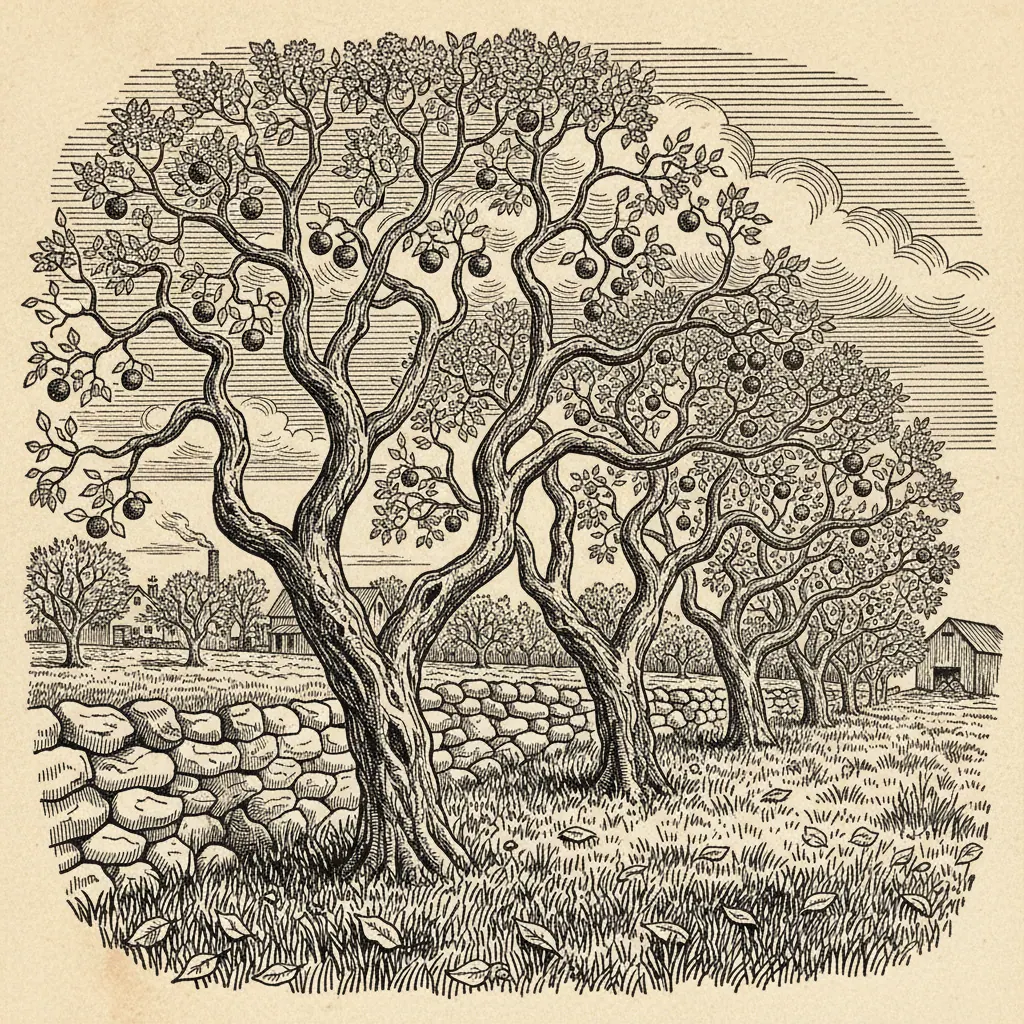
Before the 1934 freeze that wiped out something like two-thirds of New England’s commercial orchards, this region grew a different apple. Most of what made it through is gone from supermarkets entirely and survives only at preservation orchards and a handful of heritage growers. Roxbury Russet (Massachusetts, 1635) is the oldest named American apple variety. The skin is the color and texture of a worn leather glove. The flesh is dry-sweet, dense, more like a pear than a McIntosh, and the apple keeps in a cold cellar through January without losing much. It makes exceptional single-variety cider and a pie filling that doesn’t turn to slurry. Baldwin (Wilmington, Massachusetts, around 1740) and Rhode Island Greening (1796) were the two apples that fed colonial and post-colonial New England. Baldwins shipped to England by the barrel in the nineteenth century. Greenings were the pie apple, firm, tart, holding shape under heat. Both were dominant in the region until the cold snap of 1934 killed most of the mature trees, and the replanting that followed leaned heavily toward McIntosh and the new commercial cultivars instead. There are still Baldwins around. There aren’t many. Northern Spy (1800), Westfield Seek-No-Further (Connecticut, 1796), and Esopus Spitzenburg (Hudson Valley, Jefferson’s favorite, planted at Monticello) are the late-season heritage trio. All three drop in the last two weeks of October. All three store in a proper cold cellar into March. Spy and Spitzenburg are the pie standards old New England cooks reached for; Seek-No-Further is the eating apple of the three, sweet enough to compete with anything modern.
Modern Eating Apples and Where They Fit
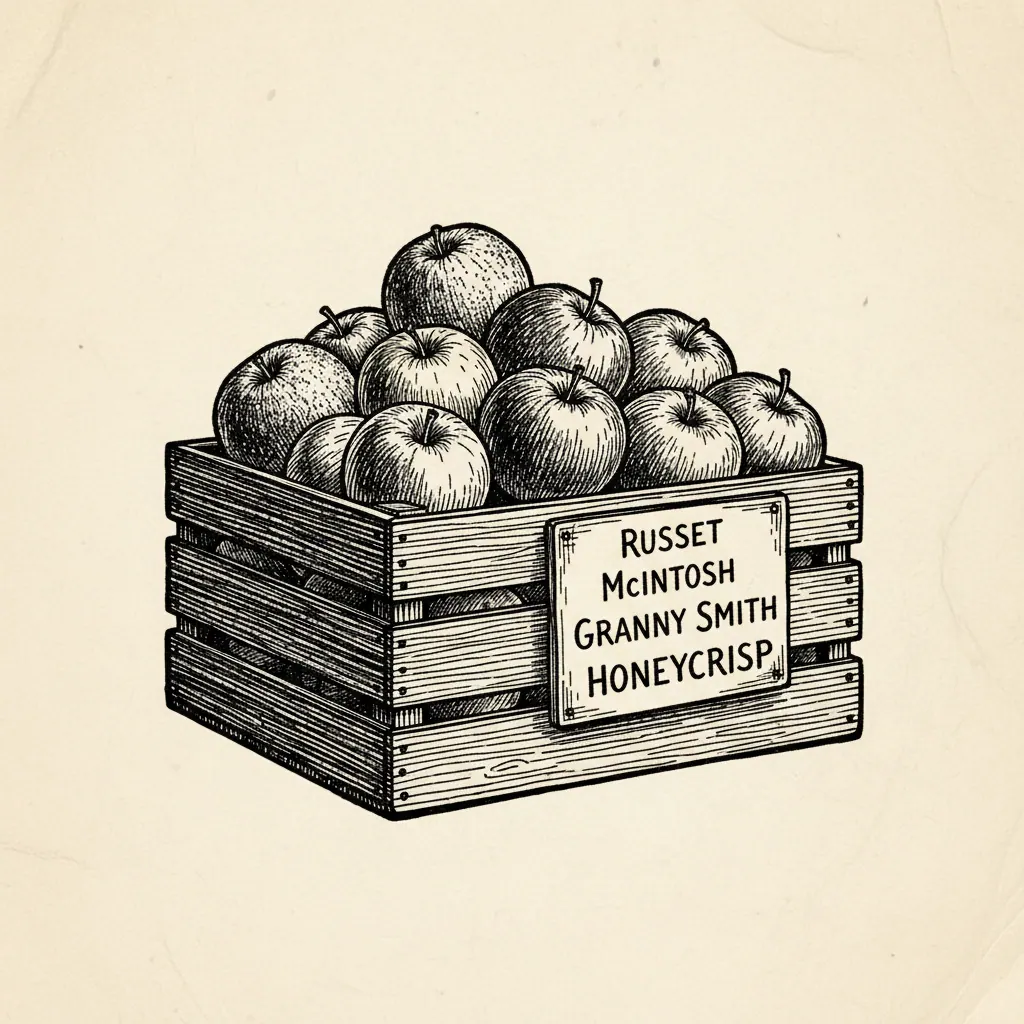
McIntosh (Ontario, 1811) is the New England supermarket default and the apple most people picture when they hear the word. Its true peak window is narrow, roughly September 1 through 15. After mid-September the flesh softens and the apple becomes better for sauce than for the lunchbox. Buying McIntosh in February is buying a different fruit than picking one off the tree the day after Labor Day. Cortland (New York, 1898) drops about a week behind McIntosh and holds longer. The flesh resists browning, which is why it shows up in fruit salads and slaw. Macoun (1923) is a McIntosh-Jersey Black cross with maybe a ten-day peak window in mid-September (blink and it’s done) and is the apple New England eaters in the know plan their orchard trip around. Empire (1945) is the storage champion of the modern crowd; an Empire picked in early October will eat well in January. Honeycrisp (Minnesota, 1991) is the newcomer that rearranged the whole rotation. Drop window runs late September into early October. Gala (New Zealand, 1934) is now widely planted across the region and runs an early-September drop. Both are eating apples first and last; neither makes a pie worth eating.
The Technical Sort: Eating, Pie, Cider, Keeper
The four real categories, with the varieties that earn each one: Eating apples, meaning high sugar, balanced acid, crisp texture, no cooking required: Honeycrisp, Macoun, Cortland, Gala, Westfield Seek-No-Further. Pie apples, meaning they hold their shape under heat and balance sugar with enough acid that the filling tastes like apples instead of jam: Northern Spy, Cortland, Granny Smith, Roxbury Russet, Rhode Island Greening. The Spy is the standard. A Spy pie is what an apple pie is supposed to taste like. Cider apples: a real cider blend runs roughly 30 percent sharps (high-acid eating apples), 40 percent bittersharps and bittersweets (high-tannin English and French cultivars), and 30 percent sweets. Named bittersweet and bittersharp cultivars now planted in New England include Kingston Black, Dabinett, and Yarlington Mill. The russets, including Roxbury, Golden Russet, and Ashmead’s Kernel, supply both sugar and the dry, complex backbone serious cider needs. Keepers are varieties bred or selected for cold-cellar storage, before refrigeration was a thing: Northern Spy, Baldwin, Esopus Spitzenburg, Westfield Seek-No-Further. Picked in late October, stored at 32 to 36 degrees in a humid cellar, these will eat well into February or March. Cornell’s NY Fruit Quarterly has run storage-life data on most of them. Some orchards specialize in heritage. Some run a deep modern rotation. Some are doing both. Tower Hill Botanic Garden in Boylston, Massachusetts maintains a preservation orchard with heritage russets and pre-1900 American varieties; it’s the place to actually taste a Roxbury Russet next to an Ashmead’s Kernel and decide whether old apples are for you. Carlson Orchards in Harvard, Massachusetts runs a deep Macoun block worth timing a September weekend around. Russell Orchards in Ipswich runs the standard coastal-NE rotation and adds cider on the back end. In New Hampshire, Gould Hill Farm in Hopkinton is the place to drive for Northern Spy specifically: the orchard has a long row of mature Spy trees and the late-October timing northern New England gives that variety. Vermont’s Champlain Valley orchards and Maine’s midcoast orchards run the calendar about two weeks behind their Massachusetts counterparts, which means a Spy picked at Gould Hill the last weekend of October is roughly the same fruit, in eating terms, as a Spy picked in central Massachusetts the second-to-last weekend. The practical move: pick three weekends across the season instead of one. Mid-September for Macoun and early McIntosh. First weekend in October for Honeycrisp and Cortland. Last weekend in October for the keepers and the cider blend. Three trips, the right variety each time, and a cellar shelf that eats apples into March. Next September, when you’re standing in front of an orchard sign that just says “apples,” ask which variety, ask which week. The answer is the difference between a lunchbox apple and a pie that tastes like the year it was made.