The Vermont Cheese Trail Map: 25 Cheesemakers and the Drive That Connects Them
Twenty-five Vermont cheesemakers worth visiting, organized into a three-day driving tour with the cheeses that anchor each stop. Jasper Hill, Cabot, Shelburne.
Vermont makes more cheese per capita than any state in the country. The Vermont Cheese Council counts more than fifty commercial creameries operating in a state of roughly 645,000 people, and about twenty-five of them keep regular hours for visitors. That’s the working number behind this guide. The trail isn’t an official route. It’s the practical sequence a serious cheese buyer would drive to hit four regions in three days without doubling back over the Green Mountains. What follows is the map: which farms, in what order, and the wheel that justifies each stop.
Why Vermont, and Why a Trail
The density is real, not a marketing line. New York makes more total cheese; Wisconsin and California make far more. But measured per capita, by creameries per resident and wheels per farmer, Vermont is the country’s outlier. The reason is the same reason the state has more dairy cows per square mile than its neighbors: the pasture suits it, the herd genetics are good, and the regulatory pathway for raw-milk and farmstead cheese is cleaner here than in most states. The Vermont Agency of Agriculture’s licensed-dairy registry is the working list of who’s making cheese commercially. The Vermont Cheese Council’s published trail map is the visitor-facing version. The two don’t perfectly align. Some licensed creameries don’t take visitors at all, and a handful of the council’s listed farms only open by appointment. The twenty-five-farm figure is the practical intersection: licensed, operating, and willing to let a stranger into the farm store. A weekend won’t cover it. Three days, planned tightly, will.
The Four Regions and the 25 Farms
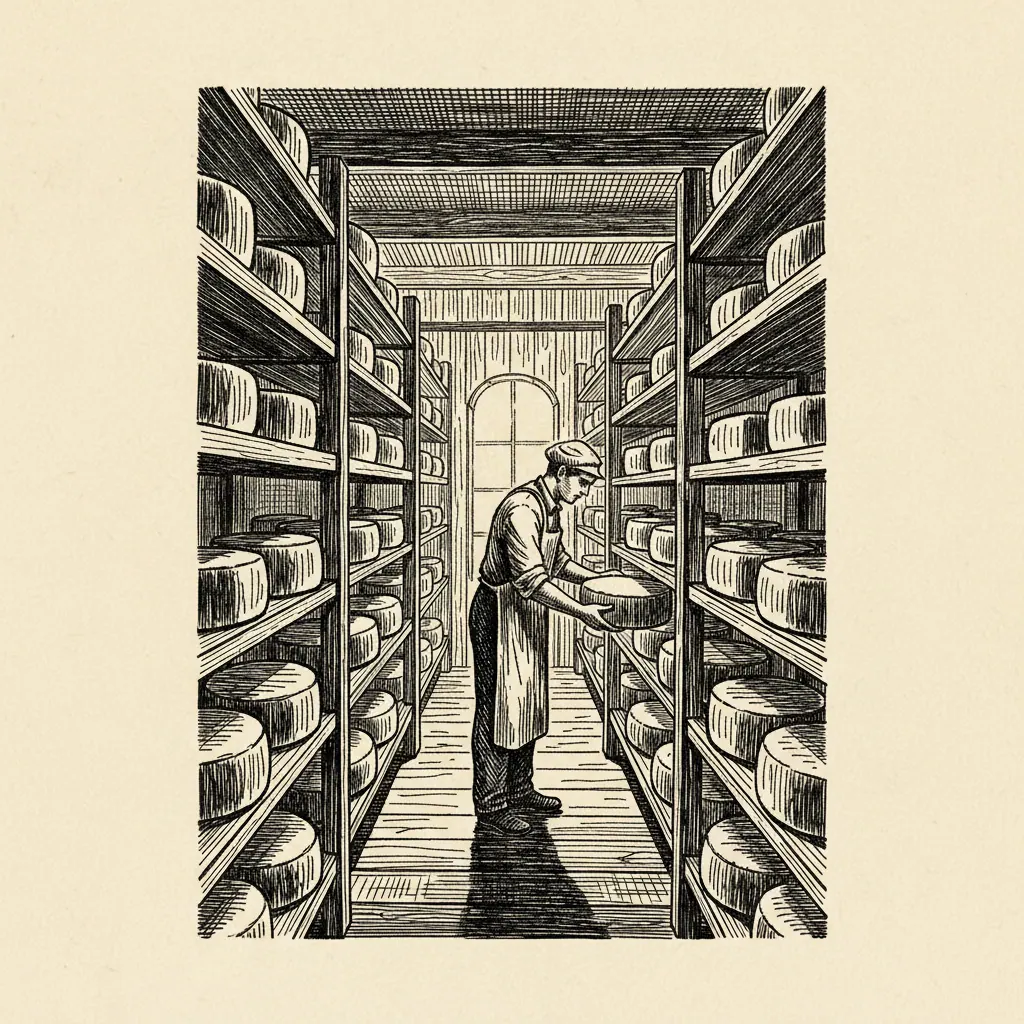
Vermont breaks cleanly into four cheesemaking regions, each with its own character. The Northeast Kingdom is cellar country. Jasper Hill in Greensboro runs the most ambitious affinage program in the United States. The underground vaults age wheels for Jasper Hill’s own labels (Bayley Hazen Blue, Harbison, Winnimere) and for partner farms whose milk gets turned into Cabot Clothbound. Cabot Creamery’s main visitor facility is in Cabot proper, twenty minutes away, and Bonnieview Farm in Craftsbury rounds out the cluster with sheep’s milk wheels. The Champlain Valley is the lake-influenced corridor. Shelburne Farms occupies a 1,400-acre estate on Lake Champlain and makes a farmhouse cheddar from its own Brown Swiss herd. Lake Champlain Creamery in Burlington is the urban stop. Twig Farm in West Cornwall is the appointment-only mixed-milk operation south of Middlebury: small, serious, worth the planning. Central Vermont is the broadest in style. Vermont Creamery in Websterville is the largest of the visitable operations and the source of Bonne Bouche, the ash-ripened goat wheel that put the state on the national fancy-cheese map. Spring Brook Farm in Reading makes Tarentaise, an alpine-style raw-milk wheel modeled on French Abondance. Plymouth Artisan Cheese in Plymouth Notch, the same village where Calvin Coolidge was sworn in by his father in 1923, still makes the granular-curd cheese the Coolidge family’s creamery produced a century ago. Southern Vermont is the closing leg. Grafton Village Cheese in Grafton is the cellar-cheddar institution. Consider Bardwell Farm in West Pawlet runs raw-milk goat and cow operations on the New York border. Vermont Shepherd in Putney makes the country’s best-known sheep’s milk washed-rind wheel and visits by appointment. That’s twelve named anchors. The other thirteen public-hour creameries fill in the gaps between them, and the trail table below is where they live.
- Jasper Hill’s underground cellar tours are limited and book out weeks ahead in summer and fall.
- Vermont Shepherd is appointment-only year-round.
- Twig Farm is appointment-only.
- Shelburne Farms’ full property access is seasonal. The welcome center, walking trails, and farm tours run May through October. The cheese counter at the property’s market keeps longer hours, but the experience that justifies the drive is summer-and-shoulder.
- Several smaller farms close to visitors during winter make-and-age cycles, generally January through March. If a winter trip is the plan, call ahead, because the calendar on a creamery’s website is often a season behind. Where this guide diverges from the Vermont Cheese Council’s published trail: the council lists every member creamery, including some that effectively don’t take visitors. The twenty-five here are the ones with verifiable public hours and a farm store or visitor counter. A few council members are excluded because their “open to public” listing is aspirational rather than operational.
Three Days, Three Loops
Three loops, anchored to where you sleep. Day one is the north loop. Start in Shelburne, drive east to Cabot, finish at Jasper Hill in Greensboro. Roughly three hours of total driving, four to five stops depending on appetite. The single hardest reservation is the Jasper Hill cellar tour; book it first and build the rest of the day backward from that slot. If the cellar tour is at two, leave Shelburne at nine, hit Cabot for an early lunch and a wheel of Clothbound, and arrive at Jasper Hill with time to walk the farm store before the underground portion starts. Sleep in Greensboro. The town has a small inn or two and is twenty minutes from where the day ends; doing the drive back to Burlington at night is wasted miles. Day two is the central loop. Vermont Creamery in Websterville is the morning stop. Spring Brook Farm in Reading is lunchtime; the farm runs an educational nonprofit alongside the creamery, and the property is worth an hour’s walk. Plymouth Artisan Cheese in Plymouth Notch is the afternoon. The Coolidge Homestead is across the road from the creamery, which makes the village a fair lunch-and-history pause. The driving day is shorter than day one. Sleep in Woodstock. It’s twenty minutes from Plymouth Notch and positions the morning for the southern loop. Day three is the south loop. Grafton, then west to Consider Bardwell in West Pawlet, then southeast to Vermont Shepherd in Putney. The day finishes near the Massachusetts line, which makes I-91 south the natural drive home: a clean exit rather than a return slog north.
What to Buy, What to Spend, How to Get It Home
Plan on eighty to a hundred and fifty dollars per stop for a serious cheese run. That’s three to five wheels or wedges per farm, weighted toward the anchors: Bayley Hazen Blue and Harbison from Jasper Hill, Cabot Clothbound from the Cabot counter, Bonne Bouche from Vermont Creamery, Tarentaise from Spring Brook, Verano or Invierno from Vermont Shepherd, and a two-year Grafton wheel as the spine of the cheddar haul. Six wheels at that caliber will run a couple hundred dollars before you hit the smaller farms. A soft cooler with two frozen ice packs holds cheese safely for roughly eight hours, enough to finish a loop and get to a hotel mini-fridge. Hard-sided coolers work too, but a soft one packs flatter in a trunk that’s filling up with paper-wrapped wedges. Reset the ice packs in the freezer overnight; most Vermont inns will oblige. Mail-order is the backup. Jasper Hill, Cabot, and Vermont Creamery all ship direct, which covers the case where a wheel won’t fit, a farm was closed, or a particular cellar release wasn’t out yet. The shipping cost is rarely cheap, but it’s cheaper than a return trip. Wrap matters. Cheese paper or wax paper, not plastic; plastic suffocates the rind and ruins texture within a few days. Most farm stores wrap properly by default; if a wedge comes back in shrink wrap, ask for a paper rewrap before leaving the counter. They’ll do it. The trail rewards planning more than improvisation. Book the appointment-only farms first, build the loops around them, sleep in Greensboro and Woodstock, and bring a cooler bigger than you think you need. The wheels are worth the drive, and next fall the cellar releases will be different again.