Mount Desert Island Beyond Bar Harbor: Northeast Harbor, Southwest Harbor, Seal Cove
The five MDI villages most visitors miss. Northeast Harbor, Southwest Harbor, Bass Harbor, Seal Cove, Town Hill — each with its own character.
Most visitors to Acadia book a room in Bar Harbor, eat at the same six restaurants on Main Street, and leave thinking they’ve seen Mount Desert Island. They’ve seen one corner of it. The rest of MDI (the working harbors on the western side, the quiet village at the geographic center, the wealthy summer enclave around the Asticou) is thirty to sixty minutes away and feels like a different island. Different pace, different lodging stock, different crowd math. The eastern lobe holds the cruise-ship traffic and the t-shirt shops; everything west of Somes Sound is quieter, less monetized, and in some respects more rewarding for the kind of traveler who came to Maine to slow down rather than to check Cadillac sunrise off a list. This is a village-by-village guide to the half of Mount Desert Island that most guidebooks treat as an afterthought.
Why the West Side of MDI Stays Quiet
Somes Sound is the only fjard on the East Coast of the United States, a glacially carved inlet that nearly splits the island in two. The eastern lobe holds Bar Harbor, the cruise pier, the Park Loop Road, and most of the chain-adjacent lodging. The western lobe holds the working harbors and the residential villages. The split isn’t just geographic; it’s economic and cultural. The road math is friendlier than it looks on a map. Northeast Harbor is about 20 minutes from downtown Bar Harbor by way of Route 3 and Route 198. Southwest Harbor is roughly 35 minutes by the same routes plus 102. Bass Harbor, the southwestern-most village on the island, is about 45 minutes. Short enough to reach for dinner; far enough to thin the crowds to a fraction of what they are at the Bar Harbor town pier. The trade is real and worth naming. The west side has fewer restaurants and fewer shops. There is no Main Street with twenty storefronts. What you gain is working lobster boats unloading at the public pier in the afternoon, lodging that frequently still has rooms in mid-June when Bar Harbor has been booked for months, and the quiet that draws the people who own the houses on the rocky points.
Northeast Harbor: The Quiet Money Village
Northeast Harbor is the village that the summer-people families have been coming back to since the 1880s. The architecture is shingle-style and unflashy. The marina, in season, fills with sailing yachts that mostly belong to people who have been tying up there for three generations. The Asticou Azalea Garden is the village’s signature public space, a Japanese-influenced landscape designed by Charles Savage in 1956 using azaleas, rhododendrons, and stones rescued from Beatrix Farrand’s Reef Point estate before it was dismantled. Admission is free; donations are accepted at the entrance. Peak bloom runs roughly mid-June, though the moss garden and the raked stones reward a visit any time the garden is open. The companion Thuya Garden, up the hill on the same road, is worth the walk if the legs allow it. The Asticou Inn has anchored the harbor since 1883, sitting at the head of the marina with a long porch that faces the water. The full Asticou treatment, its food, its history, its rooms, is the subject of a separate post. For purposes of this guide, the relevant fact is that staying at the Asticou puts you within a ten-minute walk of the garden, the library, and the boats. The Northeast Harbor Library is small, well-funded by the families who summer in the village, and one of the best rainy-afternoon stops on the island. The reading room has water views. There are local-history holdings that you will not find at the Bar Harbor branch.
Southwest Harbor: The Working Fisherman Side
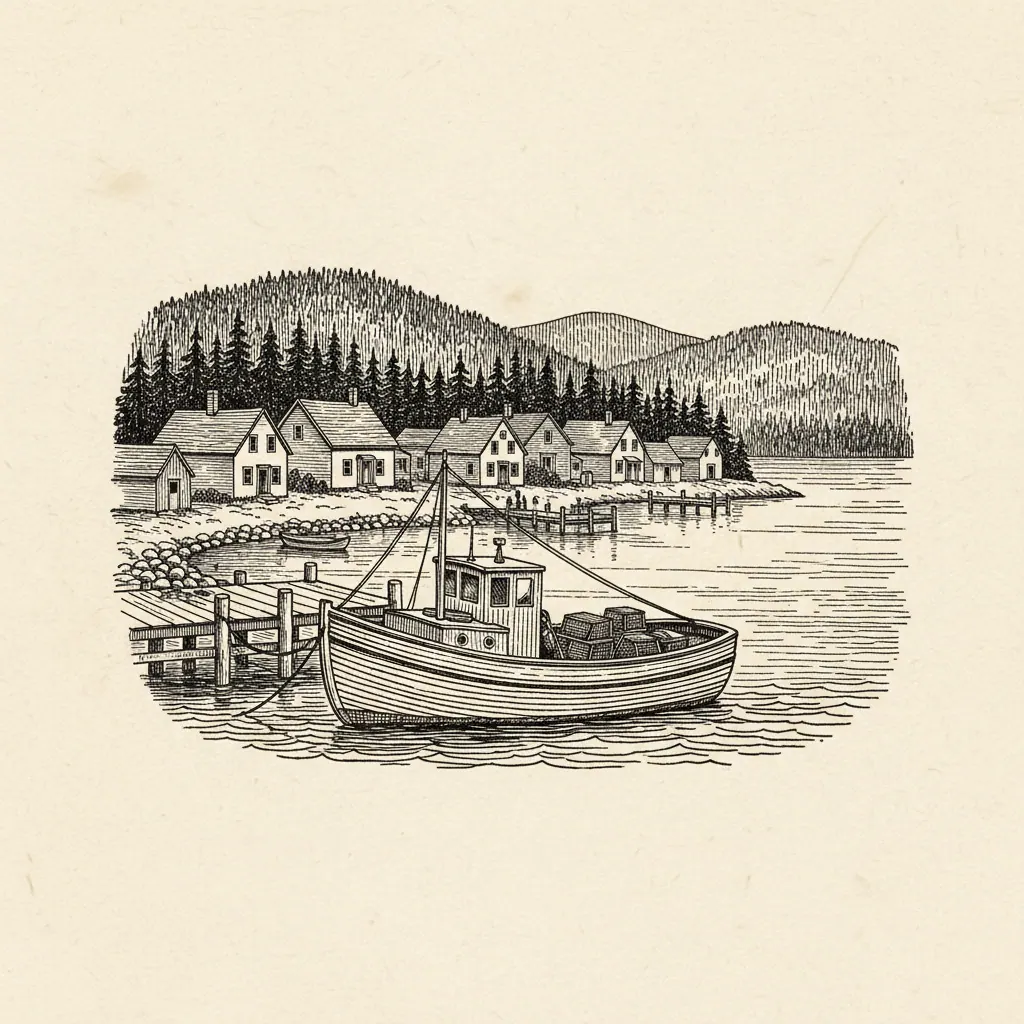
Southwest Harbor is the year-round village. The lobstermen who unload at the public pier in the late afternoon live there. The harbor itself is an active commercial waterfront: rope, traps, boats with names painted on the stern in the New England way. The Claremont Hotel, perched above the water on the eastern side of the harbor, is the Asticou’s friendly rival. It is older, founded in 1884, and has croquet on the lawn (it hosts an annual tournament that has run since 1978). The reputation can read as starchy on paper. In person, the Claremont is more relaxed than that, particularly the boathouse bar in the early evening. The Wendell Gilley Museum, on Herrick Road, is the village’s small cultural anchor. Gilley (1904–1983) was a Southwest Harbor plumber who became one of the country’s most celebrated bird carvers. The museum opened in 1981 and holds roughly 200 of his pieces, with rotating exhibitions and active carving demonstrations. After lunch, the public pier is a five-minute walk away, and if you time it right (late afternoon, weekdays especially) you can watch the boats come in.
Bass Harbor and Seal Cove: The Western Edge
This is the far end of the island, and it rewards the drive. Thurston’s Lobster Pound in Bernard, just across the inlet from Bass Harbor proper, is the best lobster pound on Mount Desert Island. That is a strong claim, and it is the consensus claim. Thurston’s has been written up by Down East, the Globe, and the New York Times, and the line at peak hours bears the reputation out. The setup is the right one: a yellow building over the water, screened upper deck, lobsters cooked in seawater, picnic-table seating with views of the working harbor. Sunset is the canonical visit; the parking lot is small; arrive before the tour-bus window or after it. From the wharf at Bass Harbor itself, on a clear day, the floats of a working oyster farm are visible across the water. The Seal Cove Auto Museum, inland off Pretty Marsh Road, is more significant than its address suggests. The collection focuses on Brass Era automobiles, roughly 1895 to 1917, with about 50 cars and a comparable number of motorcycles. The cars are not roped off; you can walk up to a 1907 Stanley Steamer and look at the boiler. The museum is open seasonally. The relevant trailhead does not appear on the standard Park Loop Road map most guidebooks reproduce.
Town Hill: The Center That Functions as a Base
Town Hill is not a village in the picture-postcard sense. It is the geographic center of MDI and home to the Acadia National Park headquarters off Route 233, useful chiefly because it lets you reach the Eagle Lake and Jordan Pond carriage-road system without driving through Bar Harbor’s summer traffic. It is mostly residential, with several small inns and B&Bs scattered along Crooked Road and the Indian Point spur. The village’s history, including its 18th-century Quaker meeting house, one of the oldest in northern New England, is the subject of a forthcoming standalone post. As a base of operations, Town Hill works well for travelers who want carriage-road access in the morning, a short drive to either coast in the afternoon, and a quieter night than they would have in town.
Village-by-Village Reference Table
| Village | Character | Key Attractions | Dining | Drive from Bar Harbor |
|---|---|---|---|---|
| Northeast Harbor | Old summer-money, manicured | Asticou Azalea Garden, Thuya Garden, Northeast Harbor Library, Asticou Inn | Asticou Inn dining room; Colonel’s Restaurant | ~20 min |
| Southwest Harbor | Working year-round village | Wendell Gilley Museum, public pier, Claremont Hotel | Quietside Cafe; Sips; Claremont boathouse | ~35 min |
| Bass Harbor / Bernard | Working lobster harbor | Thurston’s, Bass Harbor Head Light, oyster farm view | Thurston’s Lobster Pound | ~45 min |
| Seal Cove | Inland, quiet | Seal Cove Auto Museum, Seal Cove Pond, Tremont Hill Trail | Limited; pack a lunch | ~40 min |
| Town Hill | Residential, central | Acadia HQ, carriage-road access, Quaker Meeting House | Limited; short drive in any direction | ~15 min |
| A quick lodging note: Northeast Harbor and Southwest Harbor have the most inn capacity outside Bar Harbor. Bass Harbor leans toward cottage rentals and a small number of cabin operations. Seal Cove and Town Hill are largely B&B and rental territory. As a rough rule, the western-side villages book out one to two months later than Bar Harbor for the same dates, meaning a June trip planned in March is plausible on the west side and is not, generally, in town. | ||||
| Sources for this piece: Mount Desert Island Chamber of Commerce; Mount Desert Island Historical Society; individual venue websites for hours and seasonal schedules. Hours and season dates change every year, particularly at the smaller museums; verify the current season before you build a day around any single stop. | ||||
| The next time the Acadia trip is on the calendar, consider booking the second half of the week on the west side. The drive across Somes Sound is fifteen minutes. The shift in pace is bigger than that. |