Lubec, Maine: The Easternmost Town in the United States
The easternmost town in the United States, population 1,300, where the sun rises before anywhere else in the lower 48. What's still there, where to stay, and how to get there.
Lubec sits at the end of Route 189, a mile and a half from Canada by bridge and three hours from the nearest commercial airport. The sun rises here before it rises anywhere else in the lower 48, which is most of what people know about the town, and almost none of what makes it worth the drive. The drive is the first honest thing about visiting. You don’t pass through Lubec on the way to somewhere else. Route 189 ends in Lubec. If you want to keep going east, you cross the FDR Memorial Bridge into New Brunswick and you’re on Campobello Island, which is Canada, which means a passport. The road simply runs out of country.
The Easternmost Town, By the Numbers
Lubec is the easternmost incorporated town in the United States. The geographic fact gets repeated on every brochure and most of the road signs leading in, but the more interesting numbers come after. The year-round population is roughly 1,300. Around 1900, it was closer to 4,000. The difference is the sardine industry. At its peak, Lubec ran five canneries simultaneously, and the harbor at Johnson Bay was packed tight with weir boats and packing-house smoke. The last cannery closed in 1981. By the mid-1980s, the economy that had built the town for nearly a century was effectively gone. That kind of contraction leaves marks. Walk Water Street and you’ll see the empty cannery footprints, some converted, some not, and houses that were built for cannery workers and their families standing on lots that haven’t been subdivided since. The town didn’t fall apart after the canneries closed; it adjusted, slowly, and the adjustment is still happening.
What to See: Lighthouses, Parks, and the Last Smokehouse
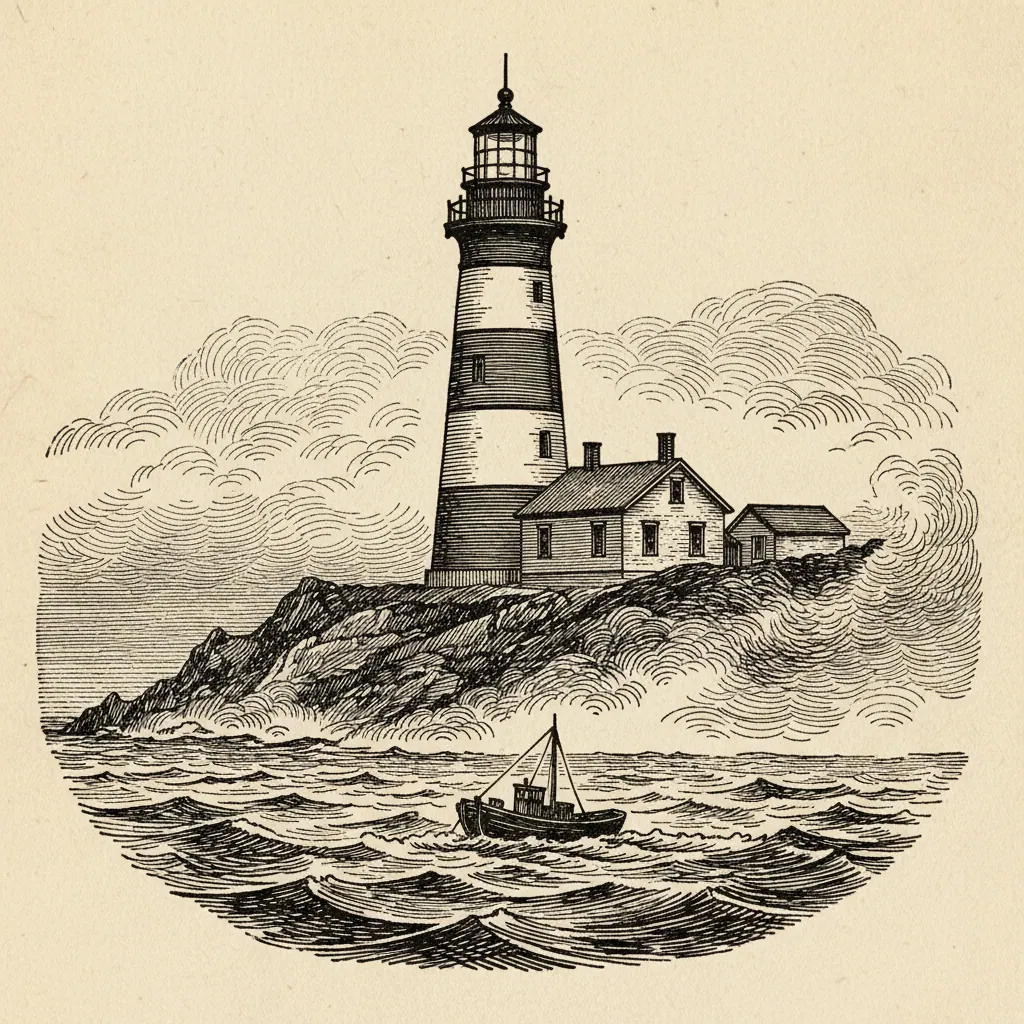
Most visitors come for Quoddy Head State Park, and they should. The candy-striped West Quoddy Head Light is arguably the most photographed lighthouse in Maine, which is saying something in a state with sixty of them. The bands are red and white, the keeper’s house is now a small museum, and the four miles of coastal trail running south from the light through the bog and along the cliffs are the kind of walk that earns the drive on its own. Watch the tide tables, because the cliff trail is exposed and the weather changes faster than the forecasts catch. Roosevelt Campobello International Park is across the bridge in Canada. The park is jointly administered by the U.S. and Canadian governments, admission is free, and FDR’s summer cottage is preserved much as it was when the family used it. Bring the passport. The bridge crossing takes about three minutes; the customs questions take longer if it’s your first time through, less if you’ve done it before. Cobscook Bay State Park sits a few miles back inland and gives you access to one of the largest tidal ranges in the country, about 24 feet at the mean. The bay drains and refills twice a day on a scale that’s hard to picture until you watch a kayak launch from a ramp at high tide and come back to find the ramp standing on dry mud. Birders go for the eagles and the shorebirds; paddlers go for the protected coves. The smokehouse complex on Water Street is the last surviving sardine smokehouse in the United States. It operated as a working smokehouse from the 1900s until the early 1990s, and it’s now run as a museum and preservation project. The buildings sit on pilings out over the water, the smokehouse beams still black with seventy years of herring smoke, the layout intact enough that you can follow the fish from the boat to the can. It is the single most concrete piece of cannery-era New England you can walk through, and there is nothing else like it left.
The Working Economy Now
Fishing is still the backbone. Lobster, scallops, and periwinkles come out of Johnson Bay year-round, and the harbor in February, when the tourist boats are stored ashore and the working boats keep going, is a clearer picture of what the town actually is than the harbor in July. Aquaculture is the more complicated piece. Cooke Aquaculture operates open-net salmon pens in nearby waters, and the operation is contested locally. Some Lubec residents work the pens. Some fish next to them and would rather they weren’t there. It’s the kind of working-coast tension that doesn’t show up in the photographs of the lighthouse. The arts community is the third leg. Summer brings the SummerKeys music program, which runs piano and chamber workshops out of converted commercial buildings, plus a small group of galleries operating in spaces that used to be cannery offices and net lofts. The community is small but committed, and it’s a real piece of the summer economy now, not a substitute for the canneries, but not nothing.
Where to Stay and Eat
Lodging in Lubec is limited and books up by Memorial Day for the peak weeks. Plan early. The Inn on the Wharf is built into a rebuilt McCurdy cannery on the water, with rooms looking out over Johnson Bay and a restaurant downstairs. The Peacock House Bed & Breakfast is an 1860s sea captain’s house a block off Water Street, five rooms, the kind of place where breakfast is served at one long table. Cohill’s Inn is the only true Irish pub in town, with rooms upstairs and Guinness on tap downstairs, and on a foggy Saturday night in July it’s where most of the town and most of the visitors end up. For food: Frank’s Dockside and the Water Street Tavern handle the bulk of casual dinner traffic, with lobster rolls, fried haddock, the working-coast menu. Two cautions worth knowing before you arrive. Most kitchens close by 8 p.m., and most restaurants shutter entirely between October and May. If you’re driving up for an off-season weekend, call ahead; “open year-round” in Lubec sometimes means open four nights a week with a 7 p.m. last seating.
How to Get There (and When to Go)
Bangor International is the closest commercial airport, about three hours by car. Portland adds another two and a half hours on top of that. There’s no shortcut. The route from the mid-coast runs inland through Pleasant Point and over the Carleton Bridge to Eastport, then back south to Lubec, with no direct coastal road, and the GPS will sometimes try to route you through dirt logging tracks if you let it. Stay on Route 1 to Whiting, then 189 east into town. The working tourist window is late June through early October. The shoulders on either side are real shoulders: late May is mostly fog and closed kitchens, mid-October starts giving up daylight fast. Go in July if you want everything open. Go in late September if you want the trails and the light to yourself, and you don’t mind eating dinner before 7. Outside that window, the town goes back to being a town of 1,300 people at the end of a road, with cold fog and short days and the working boats still going out. That’s the Lubec the canneries built and the canneries left, and it’s the one that’s still here.