Bass Harbor Head Light: When and How to Photograph It
The most-photographed lighthouse in Maine. When to shoot, where to stand, and the tide-and-light window that makes the iconic photo possible.
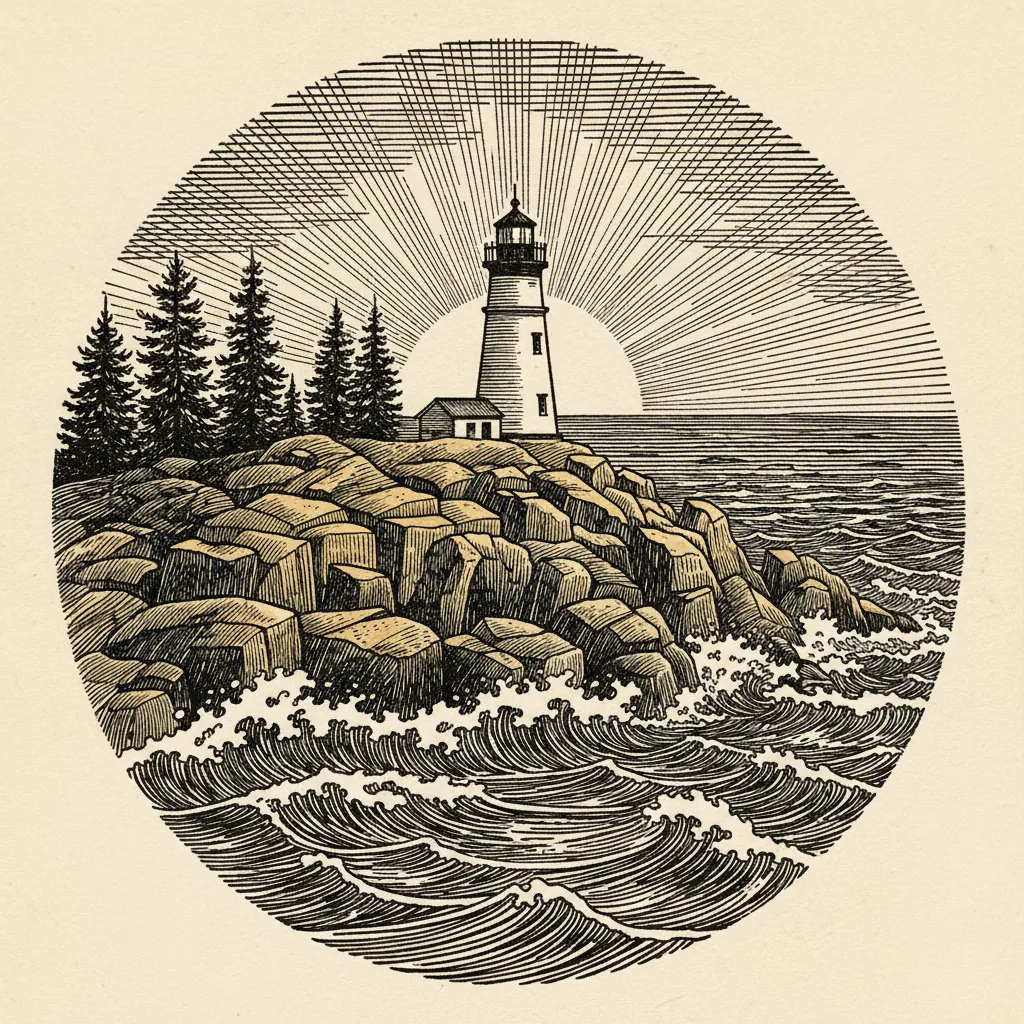
Bass Harbor Head Light is the most-photographed lighthouse in Maine, and almost every postcard you’ve seen of it was made from the same patch of seaweed-slick granite below the boardwalk, at the right tide, on the right evening, in a six-week window most visitors miss. The light itself is small. A squat brick tower, a keeper’s house attached, perched on a granite headland on the southwestern tip of Mount Desert Island. The U.S. The Coast Guard still runs the optic. The grounds are part of Acadia National Park. What you’re here for, though, is the photograph.
The Shot You’re Actually After
The iconic frame, the one on the calendars, the one on the Acadia coffee-table books, the one your aunt has on a magnet on her fridge, is shot from a position most first-time visitors never find. The composition runs lighthouse on the headland upper-right, weather-bleached granite tumbling down through the foreground, surf working at the base of the rocks, and the sun dropping into the western sea somewhere off the right shoulder of the frame. Late light. Long shadows. The white tower catching the last of it. The wood boardwalk overlook, about thirty yards uphill from the light, signed and railed and built for safety, does not give you that photograph. From the overlook you’re too high, too far back, and on the wrong side of the headland for the foreground rocks. It’s a fine record shot. It is not the photograph. The famous frame comes from the rocks below the overlook, on the seaward side. That’s the angle the U.S. Lighthouse Society uses for their lead image, and it’s the angle every working Maine landscape photographer goes after when the conditions line up.
When to Go: Season, Time of Day, Tide
Mid-September through mid-October is the window. Sunset light still has warmth in it. The summer crowd is gone. Sunset only. The lighthouse faces west and slightly south; morning sun puts the front of the building in shadow and the sea behind it in haze. Midday flattens everything. The reason every good photo of this place looks like it was made in the last hour of light is that every good photo of this place was made in the last hour of light. Tide matters more than most visitors realize. The rocks-below position is on a ledge that gets washed at high water. You want low tide minus one to minus two hours, meaning the tide is on its way out, the rocks are exposing, the seaweed is wet enough to be dark and reflective in the foreground, and the surf is still working at the base of the headland. NPS publishes Acadia-area tide tables; cross-check before you drive out. A flat, high-tide evening with no surf gives you a postcard with no drama. A receding tide with a moderate southwest swell gives you the photo. If you’re after the wide foreground composition with rocks dominating the lower third of the frame, go on a lower tide. If you’d rather work tighter, short telephoto, lighthouse compressed against surf, less granite, more water, a higher tide is fine, and the boardwalk overlook becomes more useful for the same reason: compression flattens the height difference between viewpoint and subject.
The Two Positions, Compared
The boardwalk overlook is the safe shot. No scramble, no wet rock, accessible for anyone who can walk a level wood platform. From there a short telephoto, something in the 70–135mm range on full frame, works the lighthouse against the open western sea, and on the right evening it’s a real photograph. Not the famous one, but a real one. The rocks-below position is reached by an unsigned trail-of-use that drops off to the east of the boardwalk, just before the railed overlook. It’s worn (visitors have been finding it for decades) but it’s not maintained, not signed, and not lit. The descent is over granite that runs from dry-and-grippy at the top to wet, lichen-streaked, and seaweed-covered closer to the water. Take it slow. From the rocks, a wide lens earns its keep. Something in the 16–24mm range on full frame puts the foreground granite in the lower third, the lighthouse on the upper-right intersection, and a lot of western sky for the sunset to do its work. A 35mm sees roughly what your eye sees from the same position and is the safer choice if you only want to bring one lens.
Conditions, Gear, and When to Skip It
Rubber-soled boots, not sneakers. The granite at this latitude grows a film of algae and a fringe of rockweed below the high-tide line, and both are slick enough that hiking-boot lugs do nothing for you. A tripod is non-negotiable for the blue-hour exposures after the sun is down, when shutter speeds run into the seconds and the surf needs to blur. A dry bag or a rain cover for the camera on east-wind evenings, because spray reaches the ledge. Skip the rocks-below position on a stormy east wind at high tide. The ledge that gives you the photograph at minus-two-hour tide gets washed at high water, and on a stiff southeasterly the wash comes higher than you’d think. Cameras have gone into the Atlantic from that ledge. People have, too. The photograph is not worth that. Skip midday in July and August entirely. The light is harsh, the boardwalk is shoulder-to-shoulder, and the small NPS lot fills before nine. You won’t park. If you do park, you’ll be photographing a tourist attraction, not a lighthouse. Winter is closed. Even before the gate goes up, the rocks ice over and the descent becomes genuinely dangerous.
Getting There and Parking
From the village of Bass Harbor, take Route 102A south about half a mile. The lighthouse turnoff is signed on the right, marked as a National Park Service site, and drops you down a short access road to the small lot at the end. In shoulder season, say a clear evening in late September, arrive ninety minutes before sunset to be safe. On an October Saturday with good weather forecast, give yourself two hours. The lot is small enough that on a calendar-perfect evening it fills before the photographers do, and turning around at the gate to drive thirty minutes back to a hotel without your photograph is a particular kind of disappointment. From the lot, the boardwalk is signed and obvious. Walk it. Stand on the overlook. See the angle. Then, if the tide is right and the light is starting to warm, find the worn descent on the seaward side just before the railed platform and pick your way down to the ledge. Set up. Wait for the sun to drop. Stay for blue hour, the ten or fifteen minutes after the sun is gone, when the sky goes cobalt and the lighthouse beam, if the optic is lit, starts to register against the dimming sky. That’s the shot.