Acadia in Fall: The Two-Week Foliage Window
Acadia's two-week peak foliage window runs October 5-18 in a typical year. Where to be, when to photograph, and what's open and closing.
Acadia’s foliage window is narrower than most visitors realize. The island peaks roughly October 5 through October 18, a two-week strip that runs ahead of Boston-area color by a fortnight and right in step with the Vermont and New Hampshire high country, despite Mount Desert Island sitting at sea level. Plan inside that window and the island delivers what the photographs promise. Miss it by a week on either side and you’re looking at bare hardwoods or a canopy that’s still mostly green. The good news is that the window is predictable enough to book around. The bad news is that most foliage trip-planners assume Maine peaks late, the way Boston does, and arrive in the last week of October to find Cadillac’s slopes already stripped.
The Calendar: Why Acadia Peaks Early
Two things drive the early peak. The first is frost: MDI’s summits typically take their first hard frost in mid-September, with sea-level frost following in the last week of the month. The second is August. A hot, dry August accelerates the chlorophyll drawdown and pulls the window forward by five to seven days; a cool, wet August pushes it back by about the same. That’s why Acadia’s calendar tracks the Vermont high country rather than its own latitude would suggest. Stowe and Mount Mansfield peak the second week of October because they’re at elevation. Acadia peaks the same week because the maritime air loses heat fast and the granite holds the cold. The Atlantic does soften the back end of the window. Sheltered coves on the eastern shore, places where cold wind off the open water doesn’t strip leaves, can hold color into the last week of October, even as the summits go bare. That’s the post-peak play, and it’s worth knowing about before booking flights. Check both the week before travel. If August was hot, shift the booking earlier; if August was cool and wet, shift later.
Why MDI Color Looks Different from Inland Maine
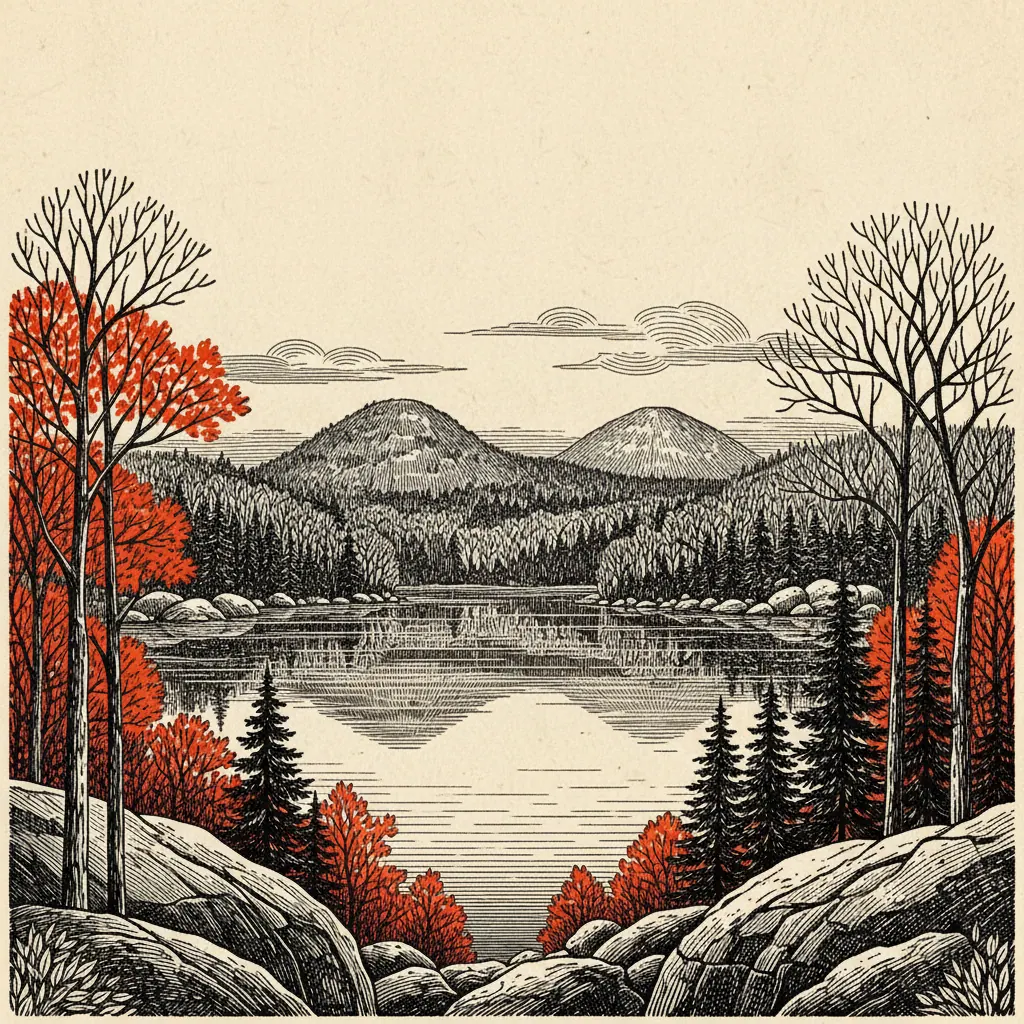
Drive inland from Bangor and the foliage runs heavy on yellow (birch, beech, the occasional sugar maple) set against the dark spruce-fir of the Maine interior. It’s beautiful, but it’s a yellow-green-black palette. MDI runs warmer. The island carries a higher proportion of red maple, sugar maple, and white birch than the inland forest, and the red maple in particular goes hard scarlet rather than the muted orange you get further north. The hardwoods sit in pockets framed by granite ledge and spruce stands, and that cool blue-green frame pushes the warm tones harder than they’d read in a uniform hardwood forest. The contrast is what photographs. The other thing the island does that the interior doesn’t: it staggers. A ten-mile drive across MDI covers summit, mid-slope, and shoreline, each on its own schedule. Cadillac’s upper hardwoods can be at peak while Jordan Pond is still a week out and the sheltered coves on the eastern shore are barely turning. That stagger is what extends the usable window from a couple of days to roughly two weeks.
Where to Go: Five Foliage Spots Ranked by Window
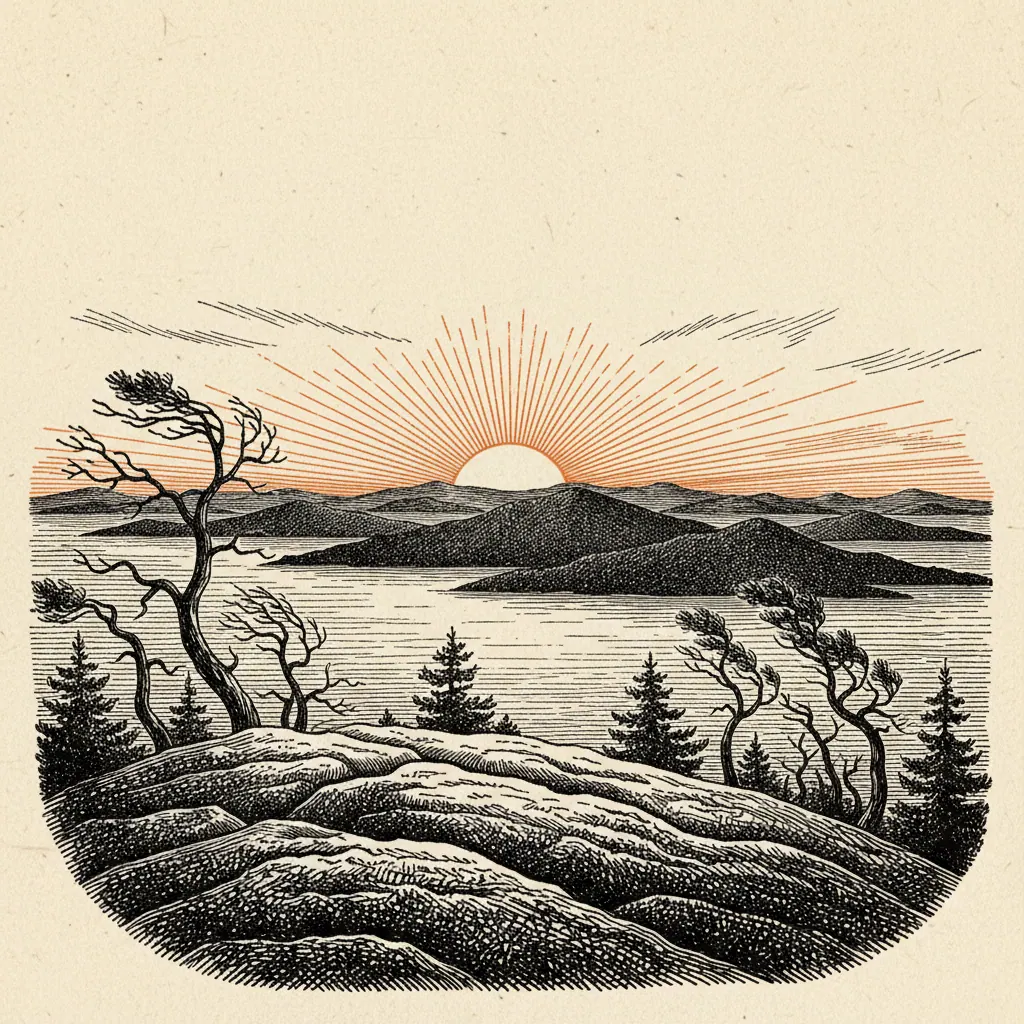
Cadillac Mountain summit peaks first, usually the first week of October. The auto road stays open through October per NPS conditions, and the panoramic sightlines from the summit make it the best spot for sunrise foliage when the slopes below are still in shadow and the upper hardwoods are catching first light. Reservations for the summit road are required during the foliage season, so book early. Park Loop Road, Sieur de Monts to the Bubbles, holds the densest hardwood mix on the island and peaks roughly October 8 through 15. This is the central window, the one most visitors are aiming at without knowing it. The drive is slow in season; budget two hours for what would normally take forty minutes. Jordan Pond and the Bubbles is the iconic Acadia composition: the two rounded summits reflected in the pond, with maples around the shoreline. Peaks roughly October 10 through 17. Important scheduling note: Jordan Pond House typically closes mid-October, which means the popovers-and-tea ritual that goes with the photo is only available for the front half of the peak window. Plan accordingly. Eagle Lake carriage road and Bubble Pond Trail are the last to peak, running October 14 through 21. When the summits are already bare, these lower-elevation, sheltered locations still hold color. They’re the answer when the trip got booked a week late. Beech Mountain and Champlain Mountain are the pre-peak answer. Higher-elevation hardwoods turn first, so the first ten days of October, when most of the island still looks green, these are already showing color.
Light, Time of Day, and the Photography Question
The October sun on MDI sits low enough by the second week that even midday becomes workable on overcast days. That’s a meaningful gift. Most foliage destinations require shooting in the first or last two hours of light; Acadia, by mid-October, gives you most of the day. The best windows are still early morning and late afternoon. From eight to ten in the morning, the light is soft, the crowds haven’t built up, and Jordan Pond and Eagle Lake hold mist off the water on cold nights. Between three and five in the afternoon, the low sun saturates the warm tones and lights the east-facing slopes of Cadillac and the Bubbles from the side rather than overhead. Side-lit hardwoods, granite, and spruce: that’s the postcard. Bright midday with full sun is the worst window. The light goes flat, the shadows go harsh, and the saturation drops. Use that block for hiking. Save the camera for the shoulders of the day.
What’s Open, What’s Closing, and the Pre/Post-Peak Play
The infrastructure calendar shapes the trip as much as the foliage one does. The carriage roads stay open through November and into early December most years. Park Loop Road typically closes December 1, though portions close earlier depending on conditions. The Hulls Cove Visitor Center runs reduced hours year-round. The closures that matter most for foliage planning happen in the second half of October. Jordan Pond House closes mid-October. Most Bar Harbor restaurants close November 1 or in the days following; the town effectively shuts down for the season. Lodging gets thin past mid-month and prices for what remains climb. Book the trip around those dates rather than around the foliage forecast alone. If the trip lands pre-peak, October 3 through 10, work the higher-elevation hardwoods: Cadillac slopes, Beech Mountain, Champlain Mountain. The summits will be at color while the lower elevations are still green. If the trip lands post-peak, October 19 through 25, work the sheltered coastal coves and Eagle Lake. Red maple holds color after the sugar maples on the summits have dropped, and the coastal microclimate buys another week beyond what the inland forecasts suggest. The middle window, October 10 through 17, is the one to aim for if the calendar allows it. That’s when Jordan Pond, the Park Loop Road hardwoods, and the Cadillac slopes are all on at once, and the restaurants in Bar Harbor are still open for dinner afterward. Two weeks, and one of them is the right one.