The Wild Blueberry Picking Map: Maine Barrens and Where the Public Can Pick
Where the public can pick wild Maine blueberries during the August harvest. The barrens, the public-access lands, and where to buy a real wood-handled rake.
Maine grows 99% of the wild blueberry crop in the United States, and almost all of it comes off about 60,000 acres of low-bush barrens spread across Washington and Hancock counties. Most of those fields are working farms: gated, machine-harvested, and not interested in your bucket. But a meaningful handful, by design or by public ownership, are open to anyone willing to drive far enough Down East to find them. This is the map of where you can actually go.
The Barrens, and Why They’re Only in Down East Maine
The wild lowbush blueberry, Vaccinium angustifolium, is a native plant. It was here before the farms. It was here before the towns. It thrives on a specific cocktail of conditions that almost nowhere else on the East Coast offers in combination: acidic, glacially scoured soil; full sun on open ridges and sand plains; a freeze cycle that kills off competitors; and enough drainage to keep the roots from rotting in spring. Those conditions stack up most densely in Washington and Hancock counties, with outliers in the coastal sand plains and a few northern fields up toward Aroostook. The Wild Blueberry Commission of Maine puts the working acreage at roughly 60,000 acres and the annual crop value in the range of $250 million in a good year, which explains why the commercial barrens are fenced, posted, and not casual about trespassers. The other thing to understand about the barrens is the two-year cycle. Each field is pruned (historically by burning, now often by mowing) on alternating years, so any given barren is “on,” meaning flowering, fruiting, worth picking, only every other August. The productive fields shift annually. A farm road that was waist-high in berries last year may be a mowed-down crop year this year. Call before you drive.
Wild vs. Supermarket Blueberry: What You’re Actually Picking
The blueberry in the plastic clamshell at Hannaford is almost certainly Vaccinium corymbosum: highbush, cultivated, bred for size and shipping. The wild lowbush is a different species growing on a plant that comes up to your shin. The difference shows up on the tongue. Per the University of Maine Cooperative Extension, the wild berry runs smaller, with a higher skin-to-flesh ratio, more concentrated sugars and acids, and a measurably higher anthocyanin load. Those are the pigment compounds that drive both the color and the antioxidant numbers the marketing leans on. None of that is hype. It’s just what a smaller berry with thicker skin does. The practical kitchen consequence: the wild berry freezes harder and bakes tighter. It doesn’t collapse into purple soup the way a cultivated berry does in a 400-degree pie. The pies in the diners from Ellsworth to Calais taste like a different fruit because they are a different fruit.
The Harvest Window: Late July to Mid-September
Peak hand-picking across most of the Down East range falls in the second and third weeks of August. The earliest fruit ripens on the warmer southern barrens of Hancock County, sometimes by the last week of July; the latest holdouts ripen into early September up toward Aroostook and on the higher inland ridges. Commercial machine harvest, the rake-and-conveyor rigs that strip whole acres in a day, runs concurrently for about four to five weeks. If you’re driving Route 1 between Ellsworth and Machias in mid-August, expect closures, slow tractors, and a haze of barren dust hanging over the road in the late afternoon. The dust is part of the season the way fog is part of June. Always call or check the managing agency’s current-season notice before driving.
| Barren | Town | Public / Private | Window | Rake Allowed | Fee | From Bangor (BGR) | From Portland (PWM) |
|---|---|---|---|---|---|---|---|
| Quoddy Head State Park | Lubec | Public (Maine BPL) | Early–mid Aug | No (hand only) | Park day-use fee | ~2 hr 30 min | ~5 hr 15 min |
| Donnell Pond Public Reserved Land | Sullivan | Public (Maine BPL) | Mid Aug | Yes | None | ~1 hr | ~3 hr 45 min |
| Schoodic Beach area | Cherryfield vicinity | Public + land-trust coordinated | Mid Aug | Check current year | None | ~1 hr 15 min | ~4 hr |
| Beech Hill Farm | Mount Desert | Private (PYO) | Aug | Farm-supplied | By the pound | ~1 hr 15 min | ~3 hr 45 min |
| Wild Blueberry Heritage Center | Columbia Falls | Private (event days) | Peak Aug only | No | Varies | ~1 hr 30 min | ~4 hr 15 min |
| A few notes that the table doesn’t have room for. Quoddy Head’s barrens sit on the headland behind the lighthouse, the easternmost picking in the United States, technically, and the rule there is hand-picking only, in part to protect the thin soils on the bluff. Donnell Pond is the most generous of the public lands: a large reserved-land unit managed by Maine Bureau of Parks and Lands, where rake-and-bucket picking has historically been allowed. The Schoodic Beach barrens north of the peninsula are sometimes opened in coordination with local land trusts; that’s the access point most likely to change year to year, so verify before you drive. |
Pick-Your-Own Farms and Where to Buy a Rake
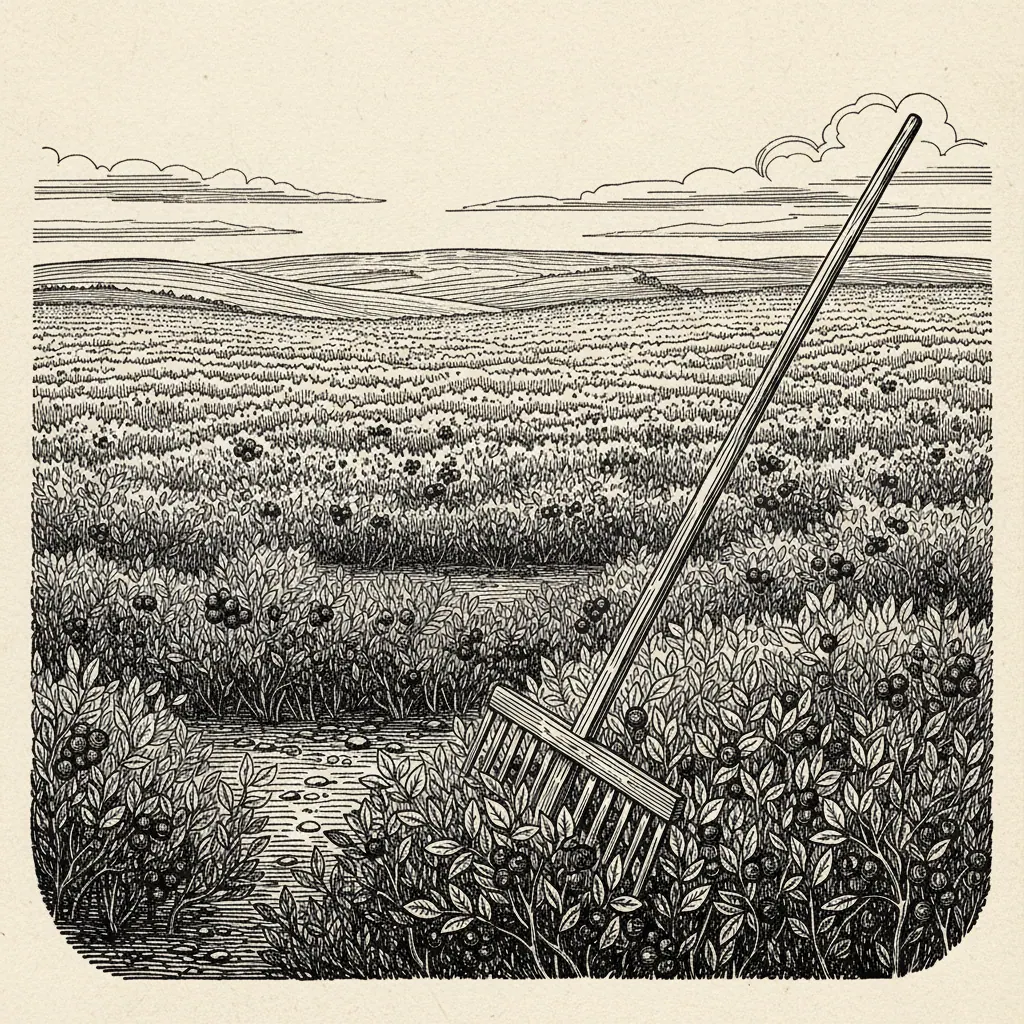
If the public-land logistics are too much, or if you want a rake to take home, the southern end of the range offers cultivated and PYO operations that are friendlier to a Saturday morning with kids. Beech Hill Farm on Mount Desert is the most reliable of these: an organic operation with cultivated highbush blueberry rows and, depending on the year, some lowbush picking on adjacent ground. They typically sell wood-handled blueberry rakes on site, the same design that’s been used in the barrens for a century: a flat scoop with steel tines wide enough to comb the berries off the bush without stripping the leaves. The Wild Blueberry Heritage Center in Columbia Falls is more of an event venue than a daily PYO, but they hold occasional public-pick days during peak season. Worth a phone call in late July if you’re planning a Down East trip in August. Hammonds Hardware in Cherryfield is the traditional source for blueberry rakes by mail order if you can’t make it up in person. The rake is the only specialized tool you need. The other essentials are mundane: a wide-mouth bucket rather than a narrow canister (the rake won’t dump cleanly into a coffee can), long sleeves, and enough DEET to convince yourself the mosquitoes aren’t winning. They are, but the berries are worth it. What you bring home from a good morning on the barrens, three or four quarts of berries small enough to look like buckshot, dark enough to stain a white shirt permanently, will outperform anything you’ve cooked with for the rest of the year. Freeze most of them on a sheet pan before bagging, the way the commercial processors do. They’ll keep their shape through January and bake into a pie in February that tastes like the second week of August in Washington County. Plan the trip for next year now. The on-cycle fields shift, the access rules shift, and the only way to know where the picking is going to be in the third week of August is to call the land managers in late July and ask.