Hot Buttered Rum: The Right Way to Make It
The colonial New England winter drink, made the right way. Dark Jamaican rum, real butter, the New Hampshire ski-lodge batter trick, and why store-bought spiced rum is wrong.
Before bourbon ever reached New England in any serious way, rum was the regional spirit. It financed the colonial economy, filled the casks on the wharves at Newport and Salem, and got people through February. The hot buttered rum that came out of that century is the drink we still ought to be making, and the recipe most of the internet is selling you would have been unrecognizable in a 1770 tavern.
Rum Was the New England Spirit
By 1770, something on the order of 159 distilleries were operating across Massachusetts, Rhode Island, and Connecticut, fed by molasses imports from the Caribbean. The molasses came in, the rum went out, and the trade financed a substantial slice of colonial New England’s economy. This isn’t decorative history; it’s accounting. Newport was the center of it. The rum trade is documented in the Touro Synagogue archives, where the merchant ledgers track barrels by the hundreds out of the harbor. Bourbon didn’t reach New England in any meaningful way until the 19th century, and even then it was an import. If you want a winter drink that’s honest to the region, the base spirit is dark rum. It always was.
Why Every Internet Recipe Gets It Wrong
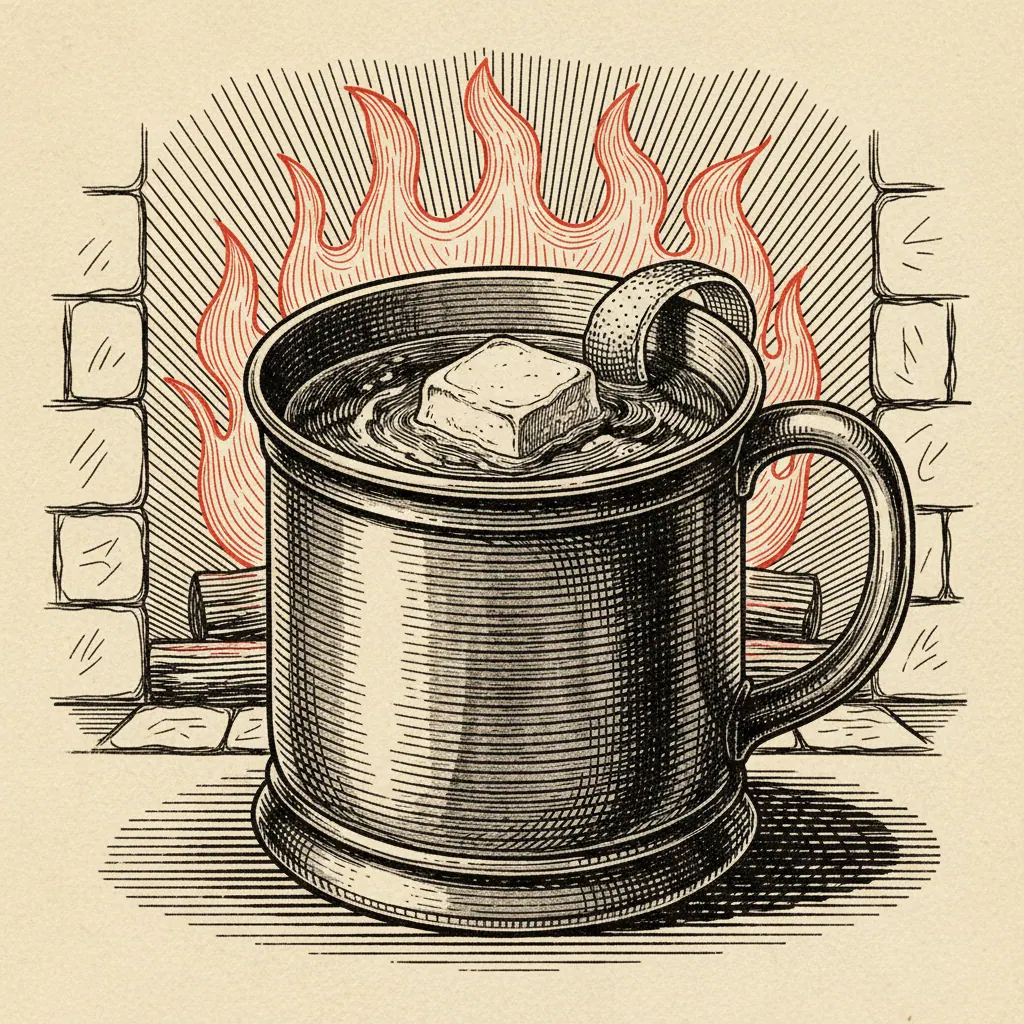
Search “hot buttered rum” and you will find a hundred recipes calling for grocery-store spiced rum, Captain Morgan and its imitators. Captain Morgan as a brand is a 1980s commercial product. There is nothing colonial about it, nothing regional, and nothing in the bottle that resembles what came off a Newport still in 1770. The canonical 18th-century build is simpler and better: dark Jamaican or Demerara rum, dark brown sugar, hot water, whole spices, and a pat of cold unsalted butter floated on top. That’s it. Five ingredients, none of which are pre-spiced. The butter is the part everyone gets wrong. The butter is supposed to half-melt while you drink it, to thin slowly into the surface and coat your lip on the first sip. Stirring it in the moment it hits the mug emulsifies the whole thing into a greasy slurry. Float it. Leave it. Let the heat do the work.
The Recipe (Single Serving)
Heat a sturdy mug first. A cold mug kills the drink before you’ve started. Run hot tap water in it for thirty seconds, dump it, and you’re set. Into the warm mug:
- 2 oz dark rum (Smith & Cross, Hamilton 86, or Pusser’s)
- 1 tsp dark brown sugar, packed
- 1 small whole clove
- A 1-inch curl of fresh orange peel, pith side down
- A grating of fresh nutmeg Top with 4 oz boiling water and stir once to dissolve the sugar. Float a half-teaspoon pat of cold unsalted butter on the surface. Grate a little more nutmeg over the butter. Do not stir again. The butter melts into the surface as you drink, and the first sip, through that thin film of fat, is the whole point of the drink. If you stir it in upfront, you’ve made hot greasy rum. If you let it float, you’ve made the thing. The rum matters. Smith & Cross is funky, high-proof Jamaican; it carries a drink. Hamilton 86 is the workhorse choice for the price. Pusser’s is the British-Navy style, smoother, slightly less assertive. Captain Morgan is not on this list for a reason.
The Batter Method (For a Crowd)
If you’re making this for more than two people, switch methods. Cream together:
- 1 lb room-temperature unsalted butter
- 1 lb dark brown sugar
- 1 lb light brown sugar
- 1 lb confectioner’s sugar
- 2 tbsp ground cinnamon
- 1 tsp ground clove
- 1 tsp ground nutmeg Beat it until it’s fully combined and pale, scrape it into a freezer-safe tub, and freeze. It keeps for months. For each drink: dollop 2 tablespoons of the frozen batter into a warm mug, add 2 oz dark rum, top with 4 oz boiling water. Stir until the batter dissolves. No separate butter pat; it’s already in there. The fat-and-sugar paste does something important: it suspends the spices in the drink instead of letting them sink to the bottom of the mug. With the fresh-grated method, the last sip is fine. With a watered-down spiced-syrup method, the last sip is sludge. The batter splits the difference and works at scale. A bartender pulling fifty drinks an hour in a base lodge in February cannot grate fresh nutmeg into each one. A gallon tub of pre-creamed batter in the walk-in does the work for him.
What to Drink It With
Hot buttered rum is rich enough that it changes what it sits next to. A few pairings that earn their place: Boston brown bread, warm, with butter. The molasses in the bread and the molasses backbone of the rum are the same flavor, twice. Slice it thick, butter it heavily, and the drink becomes the cleaner half of the pair. (See the Boston brown bread recipe.) Joe Frogger cookies. These were originally a ship’s biscuit laced with rum, designed to last a fishing voyage out of Marblehead without going stale. Drinking rum next to a cookie made with rum and molasses is a tighter loop than most modern dessert pairings will give you. (The recipe is here.) Corn chowder, served cold-night hot. Sounds wrong; works. The cream in the chowder takes the edge off the spirit, the rum’s spice cuts the dairy, and the meal lands somewhere between supper and a nightcap. Make the chowder you’d make in any case; pour the drink alongside it. The version of this drink that gets handed around online, Captain Morgan, microwaved cider, a stick of cinnamon, isn’t wrong because it’s lazy. It’s wrong because it’s the wrong drink. The actual hot buttered rum is older, simpler, and built around a base spirit that has more claim on a New England winter than anything distilled in Kentucky. Make it the right way once, with the cold pat of butter floating on top, and the imitation versions stop being interesting.