Cranberry Bog Tours: A Massachusetts Map for Harvest Season
Massachusetts grows a quarter of the U.S. cranberry crop. Six bogs that allow public visits during harvest, the Tihonet Celebration weekend, and where to eat after.
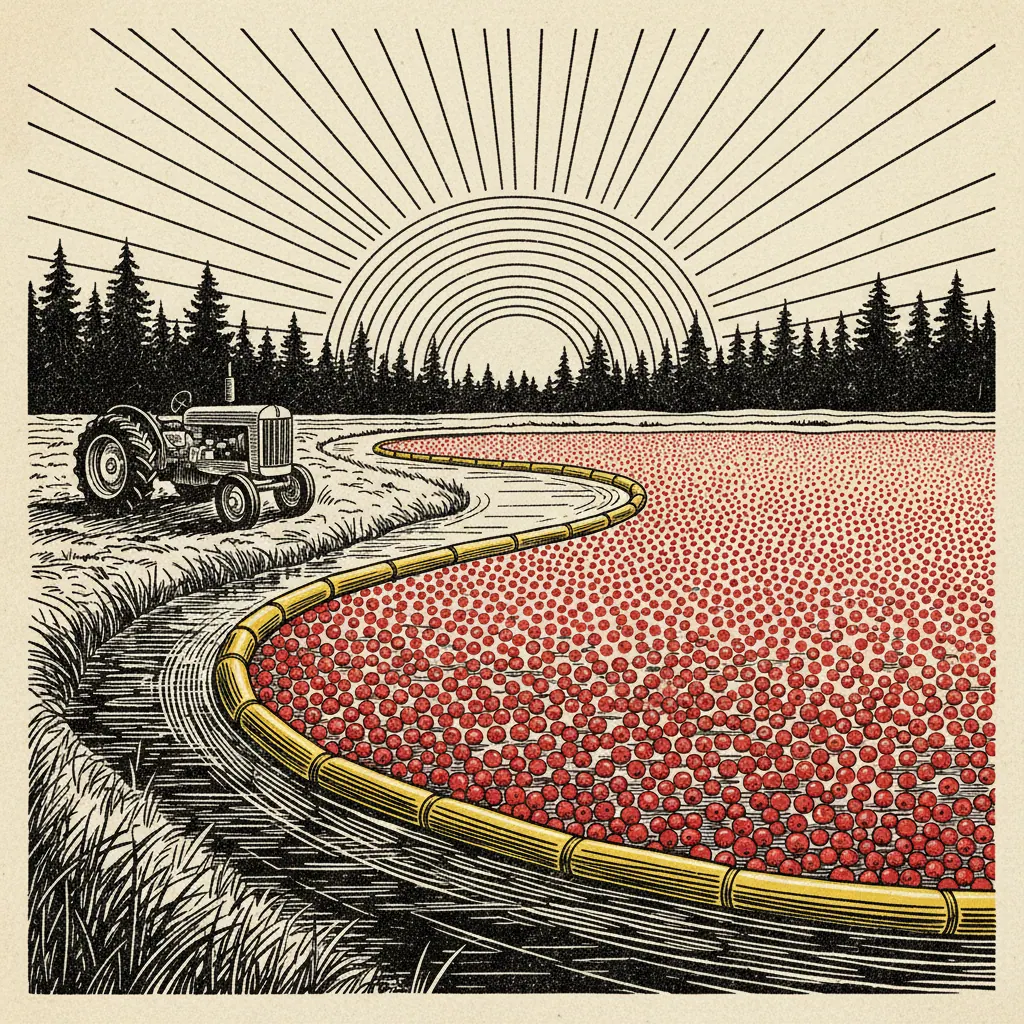
Massachusetts grows about a quarter of the country’s cranberries on roughly 13,000 acres, and for six weeks every fall, from late September into early November, the bogs flood, the berries float, and a handful of growers open the gates. The image is famous: a flat sheet of water gone red to the horizon, a worker in chest waders moving slowly through it, the whole frame looking less like agriculture than a painting someone left out in the rain. The image is also real, and you can stand on the edge of it without much trouble if you know where to point the car. Here’s where to go, when, and what to do after.
Where the Bogs Are: Plymouth, Carver, Wareham, Middleborough
The cranberry country of Massachusetts is small and specific. About 13,000 acres of working bog, concentrated in four southeastern towns (Plymouth, Carver, Wareham, and Middleborough), produce roughly a quarter of the U.S. crop in a typical year. Drive south of Boston for an hour and you’re in it. The reason is glacial. The Cape Cod Cranberry Growers Association points to the same combination of features in every grower-training document they publish: kettle ponds left by the retreating ice sheet, acidic peat soil that cranberries thrive in and almost nothing else does, and a freshwater table sitting close enough to the surface to flood a bog when the grower opens a gate. The vines themselves are perennial. Some of the working bogs in Carver are more than a century old, replanted in sections but never fully turned over. Harvest runs late September through early November. Peak wet-harvest activity, meaning the flooded bogs, the floating red, the pump trucks idling on the dikes, falls in the first three weeks of October. Outside that window you’ll see vines, water control structures, and not much theater. Most of the visitable bogs sit 45 to 75 minutes south of Boston, reached off I-495 or Route 3. From Providence it’s closer to forty minutes. From the Cape it’s a reverse commute against the bridge traffic, which is the right way to do it on a Saturday.
How a Wet Harvest Actually Works
The mechanics matter, because once you understand them the visit makes sense. A bog is flooded to about 18 inches of standing water. A machine the growers call an “eggbeater,” a slow rotor on a wheeled frame, moves through the bog and knocks the ripe berries off the vines. The berries float. The vines stay put. Once the bog is beaten, the floating berries are corralled with long yellow booms, the same kind of inflatable barrier you see in oil-spill response footage, and walked into a tightening ring at one corner of the bog. A pump line about the diameter of a grown man’s leg sucks the berries out of the water and into a waiting truck for the trip to the receiving station. About 90% of the Massachusetts crop comes off this way. The rest is dry-harvested with walk-behind machines for fresh fruit; that’s the bag of whole berries you buy in November for sauce. The wet-harvest crop goes to juice, sweetened-dried, and concentrate, overwhelmingly to Ocean Spray, which is itself a grower-owned cooperative based in Lakeville. What you’ll actually see from the boom edge: four to six workers in chest waders, the slow tightening of the red ring, the pump line moving like a slow heartbeat, and, if the wind is right, the smell of cold, clean, slightly sour water.
Six Bogs That Open to Visitors During Harvest
Most working bogs are private agriculture and stay that way. A handful open during harvest, some on a small grower-led basis and some as full-fledged events. Hours and fees shift year to year; check before driving.
| Bog | Town | Harvest visiting | Typical fee | From Boston |
|---|---|---|---|---|
| Flax Pond Cranberries | Carver | Reserved tours, weekday mornings | Modest, cash | ~55 min |
| Mayflower Cranberries | Plympton | Weekend tours during harvest | Modest, cash | ~50 min |
| Sunset View Cranberries | East Wareham | Working-grower tours by appointment | Modest, cash | ~65 min |
| Edaville Family Theme Park | Carver | Bog-train ride during harvest season | Park admission | ~55 min |
| Annie’s Crannies | Dennis (Cape) | Tours during October weekends | Modest, cash | ~85 min |
| A.D. Makepeace, Tihonet Pond | Wareham | Cranberry Harvest Celebration weekend | Free | ~60 min |
| The three smaller working-grower stops, Flax Pond, Mayflower, and Sunset View, are the right pick if the goal is to actually understand the operation. The tours are led by people whose families have grown the crop for two and three generations, the groups are small, and you can ask questions that wouldn’t survive a festival crowd. | ||||
| Edaville and Annie’s Crannies are the family options. The Edaville bog-train, in particular, is built for kids who will lose interest in a working tour after about eight minutes. | ||||
| For most visitors, though, the answer is Tihonet. |
The Tihonet Celebration: What to Expect
The A.D. Makepeace Company is the largest cranberry grower in the world. Their Cranberry Harvest Celebration at Tihonet Pond, in Wareham, runs the second weekend of October every year and is the largest public-facing cranberry event in the state. In past years the event has included helicopter rides over the operation, weather and FAA cooperation permitting. A practical note about the parking. Tihonet itself doesn’t have the lot capacity for a weekend crowd, so admission runs through off-site parking with a shuttle bus to the festival grounds. The shuttle works well early. By late Saturday morning the line stretches, which is the moment most first-time visitors regret not leaving the house an hour earlier. Sunday tends to run quieter than Saturday by a noticeable margin. Admission to the festival itself is free. Food and craft vendors take cash and card; the bog-train and helicopter rides, when offered, are ticketed separately. Check the current year’s schedule on the A.D. Makepeace site before you commit to a day, because programming shifts, and the helicopter component in particular has been on and off depending on the season.
What to Bring, and Where to Eat After
Rubber boots, even if the plan is to stay on the walking paths. Everything within a hundred yards of a flooded bog is wet ground; the dikes themselves are mowed grass over peat, and peat holds water like a kitchen sponge. Sneakers will be done by the second tour stop. A polarizing filter on the camera does more work here than any other piece of gear. The water surface throws a hard glare on a sunny October day, and the polarizer cuts it cleanly enough to reveal the depth of berries floating below: a foot or more of red, moving as a single body. Mid-morning light, a little angled, works best. Direct overhead sun flattens the color. The other thing to bring is patience. Harvest crews run on a working schedule, not a tour schedule. The best photo moments, like the boom closing, the pump truck repositioning, a worker pausing in the middle of a flooded acre with the light hitting right, come when you wait one round longer than you meant to. The visitors who shoot the famous frames are the ones who didn’t leave at the time they planned. After the tour, the local lunch options are worth the planning. Lindsey’s Family Restaurant in Wareham has the chowder you’d want after standing on a windy dike for two hours. The Pheasant in West Wareham has been a cranberry-grower lunch spot for sixty years and serves the kind of plate-and-coffee meal that the operation runs on. Most of the working bogs that open to visitors also run a small farmstand at the gate, with fresh berries by the bag, cranberry honey, and sometimes a bottle of cranberry wine from one of the Plymouth-area producers. Plan the route as a loop rather than an out-and-back. A morning at one of the small grower tours, the Tihonet festival in the early afternoon if the weekend lines up, lunch at one of the local rooms, and the drive home before the I-495 traffic finds you. The bogs are still there for next year. The light on the second Saturday in October is the part that doesn’t keep.