The Beehive Trail: Iron Rungs, Granite, and What to Know Before You Go
Iron rungs on exposed granite, 1.4-mile loop, 450-foot vertical climb. The most-attempted scary hike in New England — what to know before you go.
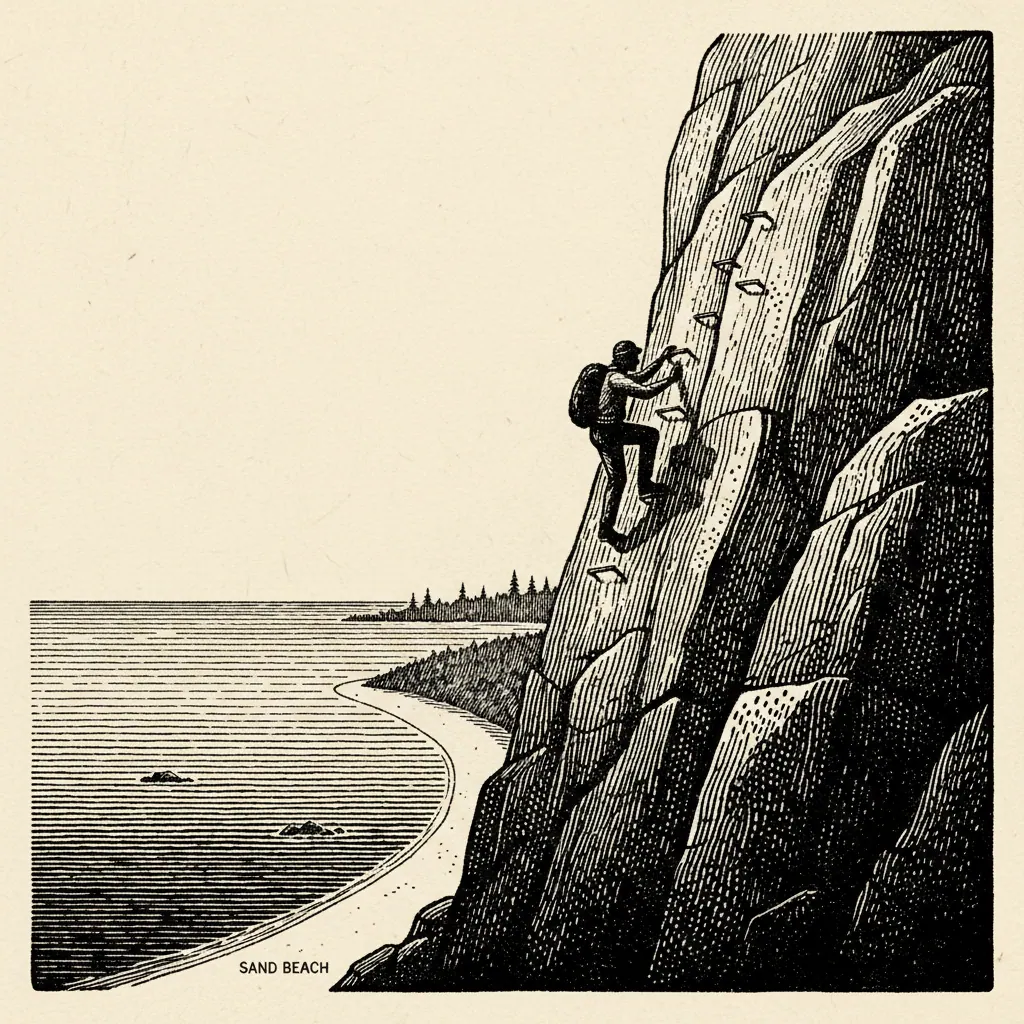
The Beehive is one of the two trails most associated with serious falls in Acadia National Park. It’s also the most-photographed climb in the park, and on a Saturday in July the line at the first set of iron rungs can run twenty people deep. Both things are true. The Beehive is a short, spectacular, genuinely dangerous trail that hundreds of people climb every summer day without incident, and that a small number of people every decade do not survive. Knowing the difference between those two outcomes is mostly a matter of when you go, what the rock is doing, and whether you’ve thought clearly about turning around. You can’t really miss it. The wooden sign is small, but the mountain itself is unmistakable, a rounded granite dome rising directly out of the woods to the north of the road. The loop is 1.4 miles. The first half-mile gains about 450 vertical feet, almost all of it on the ascent face. The summit caps out at 520 feet, which sounds modest until you’re standing on it with Sand Beach directly below your boots and the Atlantic running out to the horizon. The descent comes off the back of the mountain via the Bowl Trail, a gentler grade, no rungs, ordinary forest hiking, and brings you back to the same lot. The whole thing takes most people somewhere between an hour and two hours. The climb up is what eats the time. The descent goes quickly.
What ‘Iron Rungs’ Actually Means on This Mountain
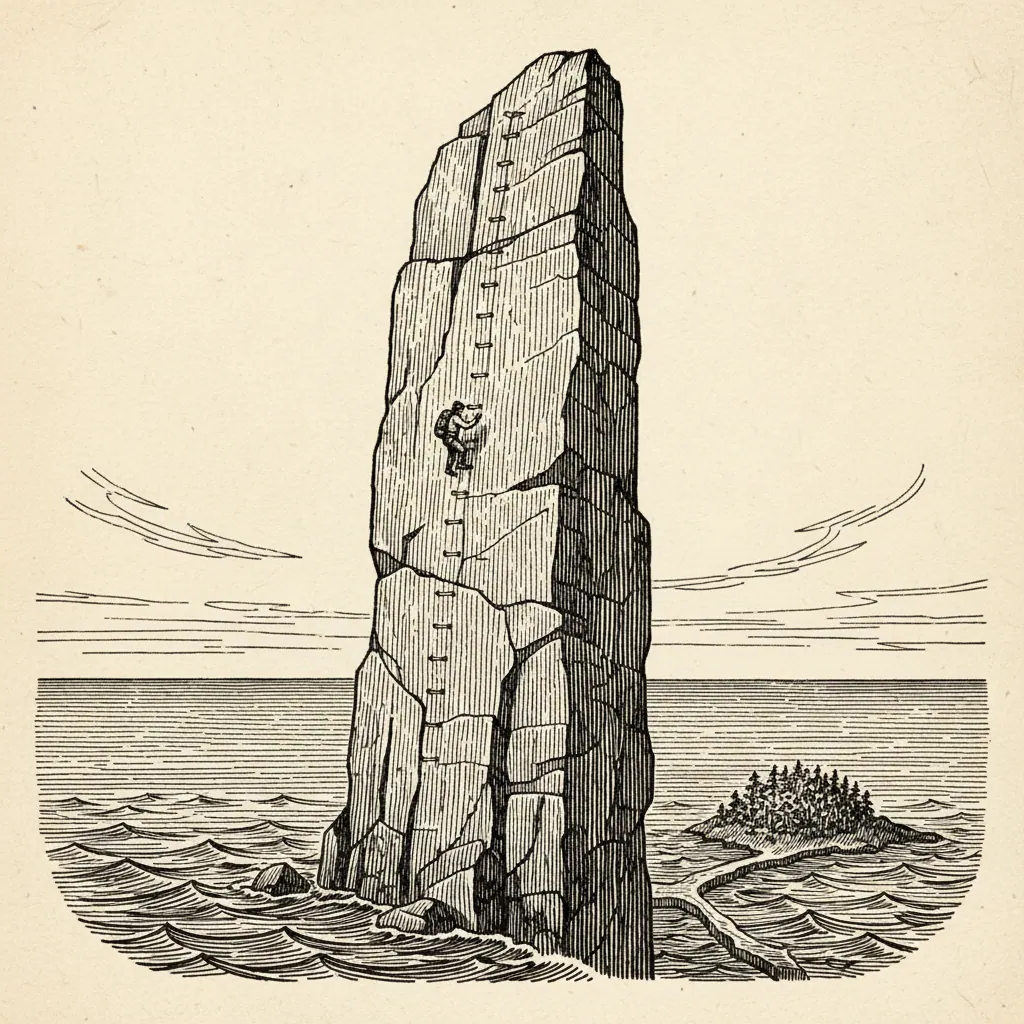
The Park Service maintains a system of iron rungs hammered directly into the granite, spaced eight to twelve inches apart, mostly continuous through the steepest sections. They’re original to the trail’s CCC-era construction with periodic replacements, and they are sturdy. They are not the problem. The problem is that “iron rungs” doesn’t mean a ladder. It means two or three exposed stretches of thirty to sixty feet each, separated by ordinary granite scrambling, the kind where your hands are on rock and your feet are looking for the next ledge. The rungs handle the parts where there’s no ledge to look for. You need real upper-body strength to climb the Beehive comfortably. You need reach. You need to be able to commit your weight to a hand-hold above your head and pull. Shorter inseams and inflexible hips make some of the rung gaps awkward in a way that’s hard to appreciate from the ground. If you’ve never done a pull-up, the upper rung sections will tell you about it. This is not a trail you bluff your way up. The rock doesn’t negotiate.
When Not to Climb the Beehive
Wet rock. The granite slabs go slick in fog or after rain, and the iron rungs themselves slick faster than the rock. Water beads on the metal and your boot sole skates. If the morning fog hasn’t burned off the upper face, wait or pick another mountain. If it rained the night before and the rock hasn’t seen sun yet, same answer. Sustained wind. Anything over twenty-five miles per hour and the exposure stops being theoretical. The upper face of the Beehive is genuinely cliffed-out, with nothing between you and the trees four hundred feet below, and gusts on the rung sections are not the kind of thing you brace through. If the flag at the Sand Beach lot is standing straight out, the mountain isn’t the play. Winter. The Park Service closes the iron-rung trails roughly November through April, dates depending on the year and the ice. The rungs glaze over and the granite holds black ice in patches that are functionally invisible. The closure is enforced; people occasionally try anyway, and people occasionally don’t come back. Kids. The Park Service recommends twelve and up. An honest read of the trail and what’s actually involved in the rung sections puts the real number closer to fourteen, with the caveat that it depends entirely on the specific kid: their reach, their nerve, their willingness to hear the word stop. A confident, athletic ten-year-old might be fine. An average twelve-year-old who hasn’t been on rock before may not be.
The Real Risk Is the Crowd
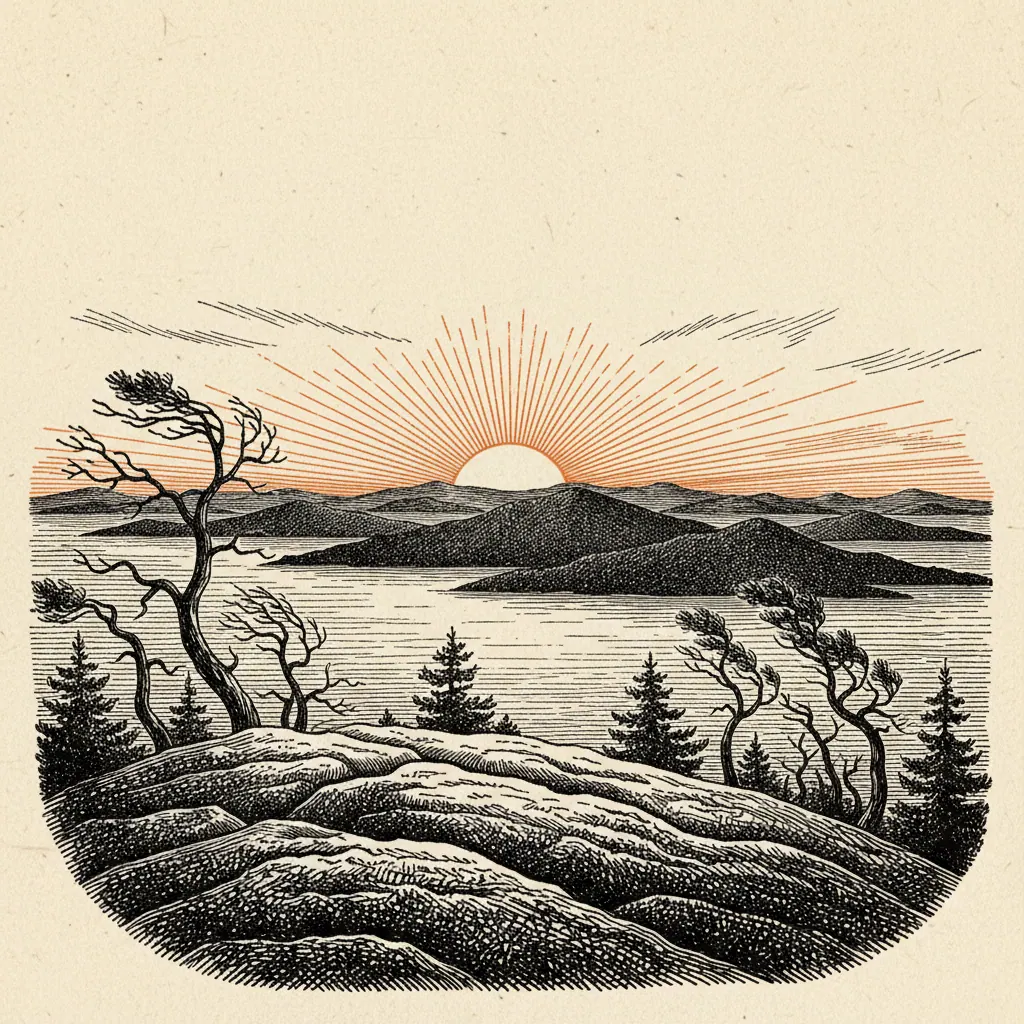
The Beehive’s danger profile is unusual. The injuries that happen there are mostly not “an experienced hiker fell off a cliff.” They are crowding incidents. On a summer mid-day, fifty or more hikers can be on the rung sections at once, moving in both directions on a trail that is, by official Park Service signage, one-way going up. Someone above hesitates. Someone below shouts encouragement. A pack shifts, a water bottle drops, someone freezes on a rung halfway up a thirty-foot stretch and won’t move. The reports out of MDI Search and Rescue describe this pattern over and over. People don’t fall because the rungs failed. They fall because three people are on the same rung and one of them tried to step around. The fix is the time of day you go. The first hour after sunrise is the cleanest: empty rungs, dry rock if the night was clear, the light coming in flat off the water and lighting up the whole eastern face of the mountain. Late afternoon after four works in shoulder season; by then the day-trippers are headed for dinner in Bar Harbor. July and August at noon? Don’t. Or do, but understand what you’re stepping into.
Alternatives for the View Without the Rungs
If the rungs aren’t the right call, whether it’s the wrong day, wrong weather, wrong kid, or wrong knee, there are honest substitutes inside the same five miles of park. Gorham Mountain Trail is the closest analog. About 1.8 miles, on the next ridge south, with comparable vertical and no iron rungs anywhere on it. The summit views are nearly identical: Sand Beach below, the Atlantic east, the carriage roads inland. If you came to Acadia for the photo, Gorham gets you the photo. The Bowl Trail to Beehive Pond skips the climb entirely and loops around the base of the mountain to a small pond that sits in the gap behind it. It’s flat enough for younger kids and old enough knees, and it has the strange quality of letting you look up at the rung face from below, which is its own kind of view. The Bubbles, on the west side of the park above Jordan Pond, are a different mountain with a similar payoff: granite summits, big water views, real effort but no exposure. South Bubble holds Bubble Rock, the glacial erratic that everyone photographs. North Bubble is the quieter cousin and arguably the better summit. None of these substitutes will give you the specific thing the Beehive gives you, which is the feeling of climbing a wall with the ocean at your back. That feeling is what people come for, and it’s also what the trail charges for. Pay the price on the right day, with the right weather, with the right people, and the Beehive is one of the great short hikes in the East. Pay it on the wrong day and the mountain has the last word. The smartest hike up the Beehive is the one you almost did, then turned around at the trailhead because the rock was wet, and went up Gorham instead. It’ll still be there next trip.