New England Barbecue: A Case for the Style That Doesn't Get Named
New England barbecue should be its own thing. Here's the case for it, broken down by wood, protein, and rub — local hardwoods, local meat, molasses and maple in the mix.
I’m sure when you read the title of this post you were thinking, “Does New England barbecue exist?” I say sure it does — or at least it should.
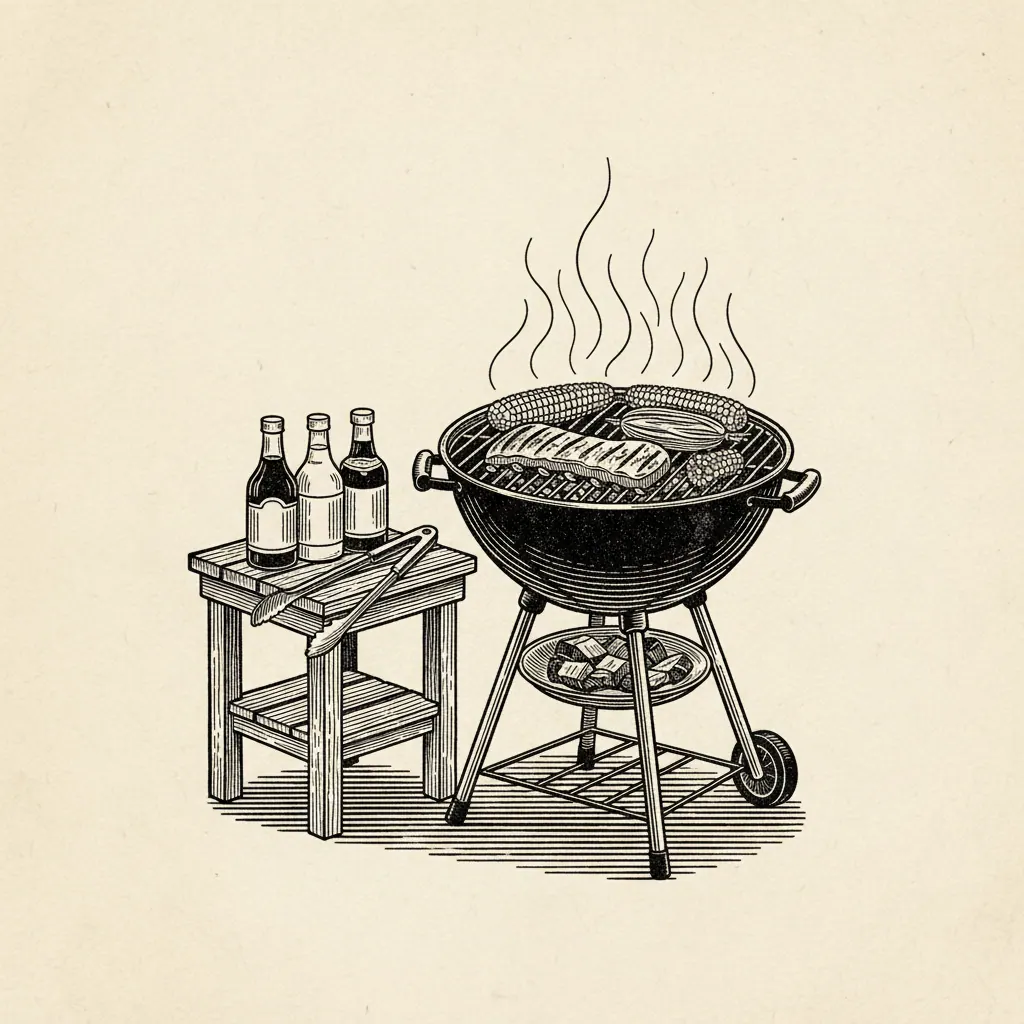
New England is known for its seafood, not its smoke. Fair enough. But in its simplest form, barbecue is meat cooked outdoors on a rack over an open fire, and somewhere along the way we all decided that meant Central Texas or Carolina, full stop. Those styles are great. There’s a reason you see Central Texas joints in Toronto. The business model works because the food is that good.
But New England has the wood, the meat, and the sugars to make a regional style of its own. Here’s how I’d break it down.
The Wood
To understand what makes anything “New England,” start with the ecology. New England has two main forest types: coniferous (not good for cooking) and hardwood (great for cooking).
Coniferous trees, pine especially, produce creosote when burned. Creosote makes barbecue taste burnt and bitter, and it’ll numb your tongue. It also causes about a quarter of residential fires in the US. Not something you want near your dinner.
Rule out the softwoods, and you’re left with fruitwoods and hardwoods.
Fruitwoods are good for smoking lighter proteins — fish, poultry. Apple is the one most New Englanders think of first, but peach, pear, plum, and cherry all grow here too. Most stores sell these as chips, so you don’t have to take a saw to your father’s favorite cherry tree. (George Washington didn’t either.)
For the hardwoods, you’ve got three good options: hickory, maple, and oak. These work for the meatier proteins — pork, beef, and game.
The Protein
What you cook isn’t all that different from the rest of the country, though historically there’s a stronger tie here to pork than beef. Either way, the move is to head to a local butcher who sources from a local farm. It will be better than anything in a chain grocery store. If you’re the outdoor type, catch your own fish or hunt wild turkey, deer, or whatever game is in season. New England has a lot to offer, and it’s not sitting in a Styrofoam tray.
The Rub
A good rub is simple. This is New England barbecue, so we’re not chasing heat. Every protein wants its own mix, but they all come down to three parts: salts, spices, and sugars. For the sugar, New England leans on molasses and maple — and that’s the part that makes the regional style its own.
The Point
New England barbecue can exist, and it can be very good. Barbecue is a cooking technique. What gives any version of it a style is locality — the wood that grows there, the meat that’s raised there, the sugar that’s made there. Hit the farmers market, the butcher, the farm. Cook it over an open flame with family and friends. Next summer I’ll have specifics: a maple-and-molasses rub for pork shoulder, and an apple-wood smoked bluefish that’s been working for me.
Frequently Asked Questions
Can you really call New England barbecue a regional style? If locality defines a barbecue style — the wood that grows there, the meat raised there, the sugars produced there — then yes. New England has hardwoods, heritage pork, wild game, and a molasses-and-maple tradition that predates most American barbecue canon.
What wood should you use for New England barbecue? Stick to hardwoods and fruitwoods. Apple, cherry, pear, and peach for fish and poultry; hickory, maple, and oak for pork, beef, and game. Avoid pine and other softwoods — they produce creosote, which ruins the flavor and is a legitimate fire hazard.
What makes the rub distinctly New England? The sugar. Every good rub has salt, spice, and sugar — but in New England, the sugar is molasses or maple syrup, not white cane. That’s the regional fingerprint, and it’s the part that separates a New England pork shoulder from anything coming out of the Carolinas or Central Texas.
Where do you source the meat? A local butcher who works with local farms is the move. Organizations like NOFA (Northeast Organic Farming Association) can point you toward farms in your state. If you hunt or fish, wild turkey, deer, and bluefish are all legitimate New England barbecue proteins.