Old Black Joe's Marblehead: The Heritage Story Behind the Joe Frogger
Joseph Brown ferried Washington across the Delaware with the Marblehead Regiment, then ran an integrated tavern for 40 years. The frog pond beside it gave the cookie its name.
Every December, Marblehead bakes a cookie named for a frog pond that sat beside a tavern run by a Black Revolutionary War veteran and his wife for more than forty years. The cookie is famous. The man whose name it carries is not, and that asymmetry is the story worth telling. The Joe Frogger has outlived its namesake by two centuries. It traveled in barrels to the Grand Banks, came home in Marblehead kitchens, and earns a festival on the first Saturday of every December. The man it commemorates, Joseph Brown, born enslaved, freed before adulthood, mustered under John Glover, tavern-keeper on Gingerbread Hill until he was old, earns considerably less. This post is an attempt to flip that ratio, at least for the length of one read.
Joseph Brown, Born Into Marblehead
Joseph Brown was born in Marblehead around the middle of the 18th century to enslaved parents. He was emancipated before he reached adulthood, a status that probate and pension records held by the Marblehead Historical Society help reconstruct, since enslavement and freedom in colonial Massachusetts were both legally documented and inconsistently enforced. The town’s working population kept its own informal records too, in shipping rolls and church books, and Brown turns up across them. His neighbors called him Black Joe. The phrase is the era’s vernacular, written into town records as a matter of routine identification rather than respect. The historical record uses it; this post does not. He had a name. It was Joseph Brown. Marblehead in the 1760s and ’70s was a working fishing port of roughly five thousand people, dependent on the cod trade and on the transatlantic schooner traffic that moved through its harbor. It also held a small free Black population whose lives were documented in scattered places. Lorenzo Greene’s The Negro in Colonial New England (1942) remains the standard reference for the broader picture, and the Marblehead-specific records corroborate what Greene found regionally: free Black residents worked the docks, served on crews, and were embedded in the town’s commercial life in ways that make the later integration of Glover’s regiment less surprising than it sounds.
The Marblehead Regiment and the Crossing of the Delaware
Joseph Brown served under Colonel John Glover in the Marblehead Regiment, the amphibious unit of fishermen and mariners that ferried Washington’s army across the ice-choked Delaware on the night of December 25, 1776. Marblehead’s working crews already were (you cannot run a cod schooner with men you refuse to stand beside), and the regiment carried that working-deck culture into the war. The Massachusetts Historical Society holds the muster rolls that document the unit’s composition. Pension applications filed by Marblehead veterans decades later, when the federal government finally agreed to compensate Revolutionary service, corroborate the regimental record from the other direction. This is documentary history, not legend. The crossing happened. Brown was on a Marblehead crew. The cookies that bear his name were baked, eventually, by his wife in a tavern he ran after he came home.
The Tavern on Gingerbread Hill
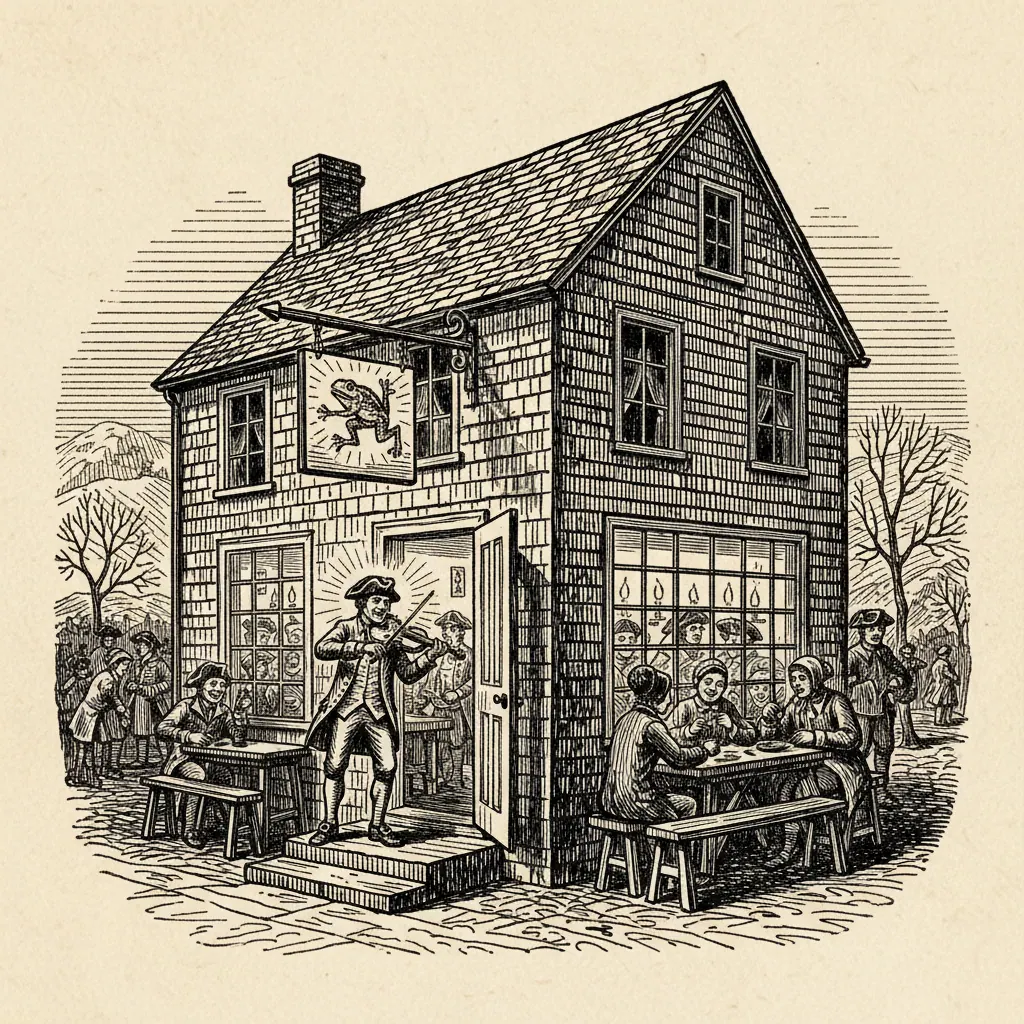
After the war, Joseph Brown and his wife Lucretia, known across town as Aunt Crese, opened a tavern on Gingerbread Hill, the rise off what is now Pleasant Street. They ran it for more than forty years. It was an integrated public house at a moment when very few in Federal-era New England were. Integrated by race, by class, and by nationality. Sailors off transatlantic schooners drank there. Local fishermen ate there. Free Black residents of Marblehead and white townspeople sat in the same room, on the same nights, eating the same food. Travelers’ diaries note the dancing. Shipping records place specific crews at the door. The Marblehead Historical Society’s tavern files preserve the operational footprint: who supplied the rum, who paid the taxes, when the licenses renewed. The frog pond beside the tavern is the source of the cookie’s name. Not metaphor. Just geography. There was a pond, there were frogs, the cookies came out of the kitchen behind it, and the name stuck the way names do in fishing towns: practical, unsentimental, and permanent.
Why the Cookie Lasted
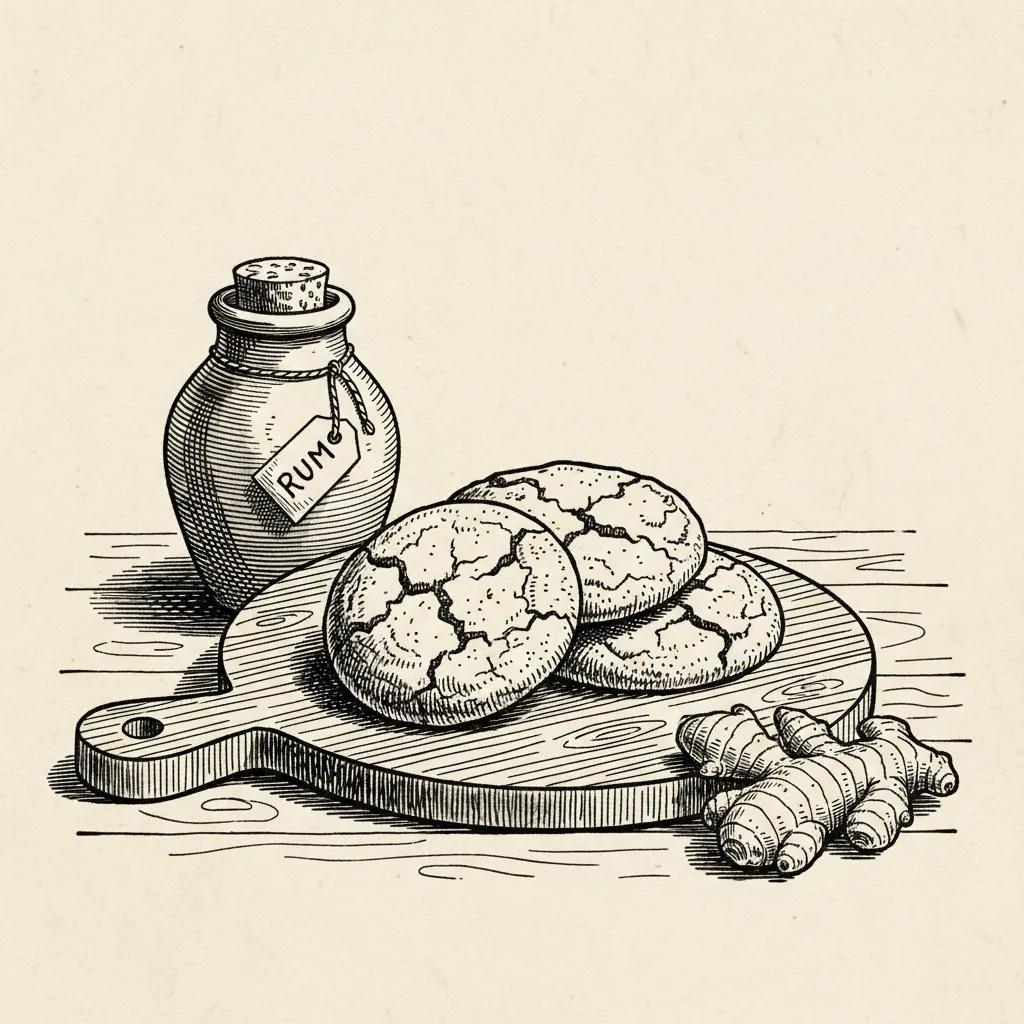
Aunt Crese’s molasses-and-rum cookies were engineered for the Grand Banks. The rum drew moisture out and the molasses held what was left, which meant the cookies kept for weeks in a sealed barrel under a damp deck. That mattered to Marblehead’s cod fleet considerably more than flavor did. A fisherman two weeks into a six-week trip is not evaluating a cookie on its merits. He is evaluating whether it has gone hard, gone moldy, or gone missing. Joe Froggers did none of those things. They went out in barrels with the fleet, came home in the same barrels mostly empty, and migrated from the tavern’s kitchen into Marblehead home kitchens as a Christmas tradition that has now survived two centuries. The recipe is forgiving (molasses cookies generally are), and the rum-and-spice profile reads as colonial without trying to. The Marblehead Joe Frogger Festival, held the first Saturday of December, is the modern continuation. The working kitchen version of the recipe lives at /posts/joe-froggers; this post is the history that recipe deserves.
Walking the Story in Marblehead Today
The starting point is the Marblehead Historical Society at the Jeremiah Lee Mansion, 161 Washington Street. The mansion itself dates to 1768 (Lee was one of the wealthiest merchants in the colonies before the Revolution, and the house is a serious piece of Georgian architecture in its own right), but the documentary archive is the reason to come. The records on Joseph and Lucretia Brown are here: tavern-era documents, regimental references, the probate and pension paperwork that make the names more than legend. Old Burial Hill holds the gravestones of Joe and Crese. It is a quiet stop on what should be a more visible Black Heritage Trail through a town that under-advertises its abolitionist record and its integrated-tavern history. Marblehead’s colonial story is usually told through the Lees and the Glovers and the merchant class. The Browns belong in the same telling, and the headstones are there if you know to look. To anchor the colonial walk, pair the Lafayette House (1726) at the corner of Hooper and Union with the Lee Mansion. The Pleasant Street area, a short walk from both, is where Gingerbread Hill rises. The tavern itself is gone. The geography that explains it is not. To eat the cookie in 2026: the Old Town Bake Shop carries them year-round, the Driftwood pairs them with morning coffee through the winter, and the Marblehead Museum gift shop runs them hard during the December festival weekend. None of them are bad. The festival weekend is the one to plan for, partly because the cookies are everywhere and partly because the town leans into the history during those few days in a way it does not the rest of the year. The cookie will outlive all of us. The man it is named for has been dead for nearly two hundred years, and the town that bakes him into its Decembers owes him, at minimum, the courtesy of remembering who he was. Joseph Brown of Marblehead. Mariner, soldier, tavern-keeper. Married to Lucretia. Buried on the hill. The cookie is the easy part of the story. The rest of it is right there at 161 Washington Street, waiting to be read.